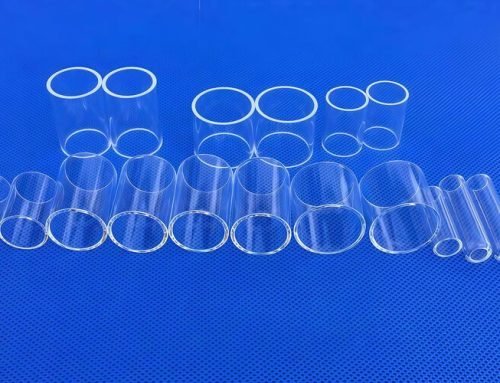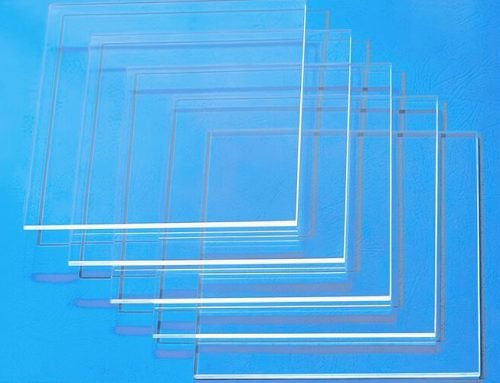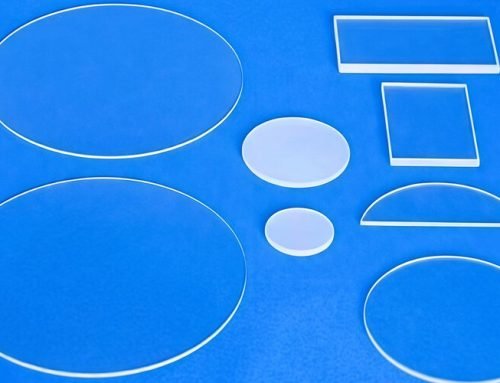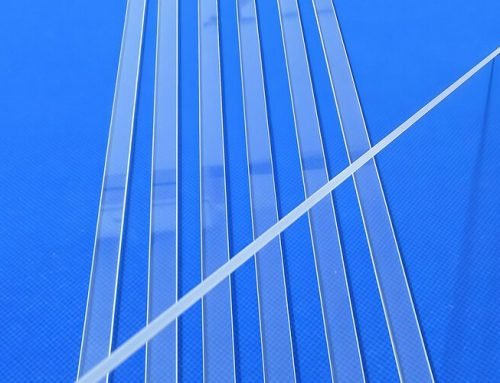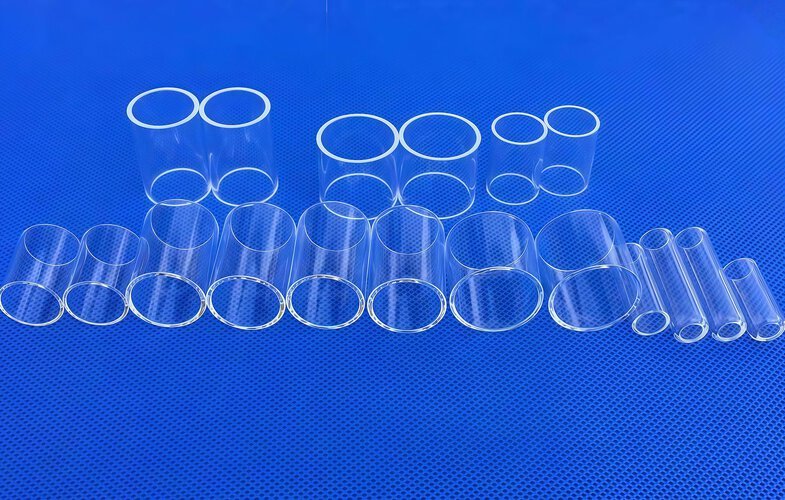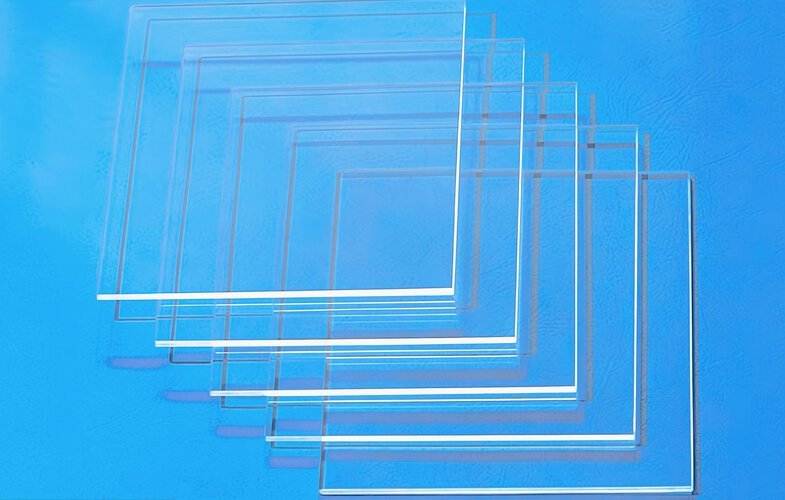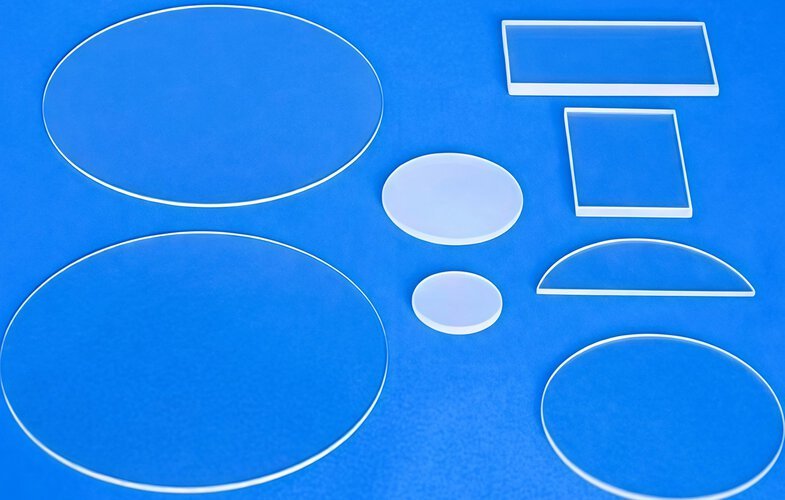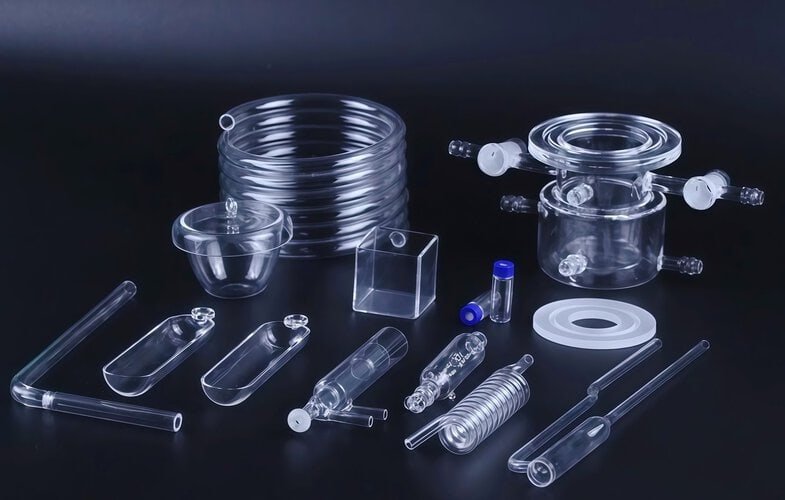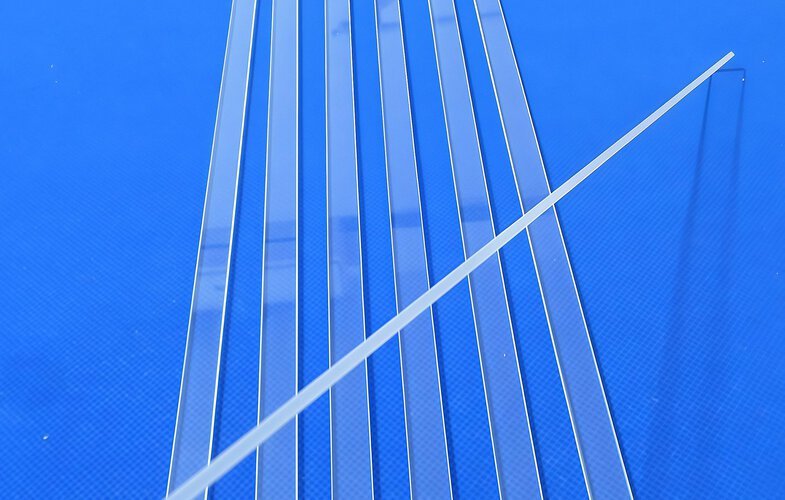
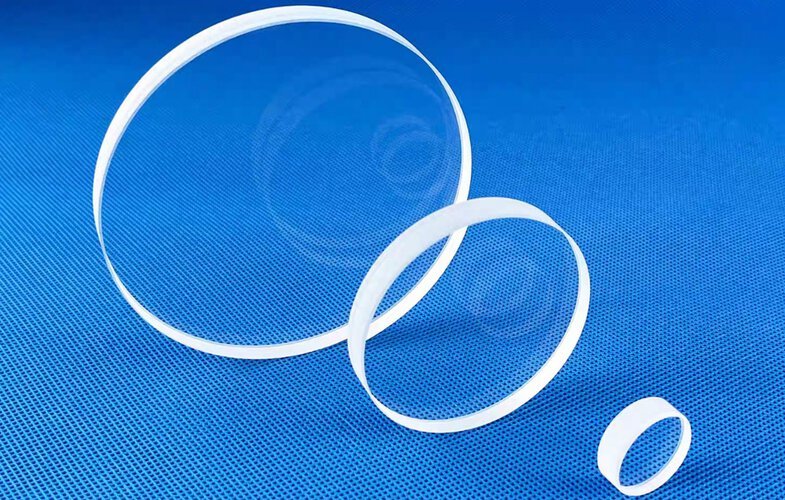
Fused silica quartz plates are renowned for their exceptional light transmittance, which consistently exceeds 90% across the ultraviolet to near-infrared wavelengths (190-2500nm). After being coated with an anti-reflection film, the light transmittance in some wavelengths exceeds 97%. They are well suited for high-precision optical imaging, laser systems, spectral analysis and aerospace applications, as well as harsh environment detection scenarios.
Its core advantages and application scenarios are as follows.
- High transmittance
- High transmittance in wide ranges of wavelengths
Fused quartz is renowned for its consistent light transmittance, which typically remains at over 90% across a wide range of wavelengths, from 190 to 2500nm. In the case of specific products, after being coated with an anti-reflection film, it has been demonstrated that the average light transmittance can reach 97% in wavelengths of 210-700nm, which approaches the theoretical limit.
- Low absorption and scattering
Fused quartz is of a high purity and low impurity content. Light loss is primarily caused by surface reflection, and this can be further reduced by applying an anti-reflection film coating. For instance, the fused silica plate at 193nm deep ultraviolet has a light transmittance of over 98% after coating, making it suitable for ArF excimer lasers.
- Typical application scenarios
- High-precision optical imaging
Fused quartz is an ideal material for components such as camera lenses, telescope lenses and microscope objectives due to its low dispersion (Abbe number of approximately 55) and high optical uniformity. For instance, the surface finish of λ/4 UV fused silica plates reaches 40-20, and the wavefront distortion is only λ/4, making them ideal for imaging system protection windows.
- Laser system
Due to its high laser damage resistance threshold and low thermal expansion coefficient, fused quartz is able to withstand the transmission of high-energy lasers without suffering from thermal deformation. For instance, the protection window of the laser endoscopes is made of fused quartz to prevent plasma from contaminating the laser endoscopes.
- Spectral analysis
Fused quartz is a core component of spectrometers, grating spectrometers and other equipment due to its high light transmittance in the ultraviolet to near-infrared wavelengths. For instance, in the field of 193nm deep ultraviolet spectroscopy analysis, fused silica plates are utilized for the detection of the electronic structure of materials.
- Aerospace and harsh environments
The high temperature resistance (1100 °C over long term and 1300 °C over short term) of fused quartz, in conjunction with its radiation resistance and chemical stability, renders it the optimal material for the construction of windows in manned spacecraft and deep-sea probes. For instance, the windows on the International Space Station are made of fused quartz, which are required to withstand extreme temperatures and radiation.
- Industrial inspection and micro-nano processing
In the field of wafer defect detection, a 193nm laser is utilized to illuminate the sample through a high-transmittance quartz plate, enabling the distinction of micrometer-level defects. In the field of laser processing, its low fluorescence (<1 ppm) avoids interfering with the processing process.