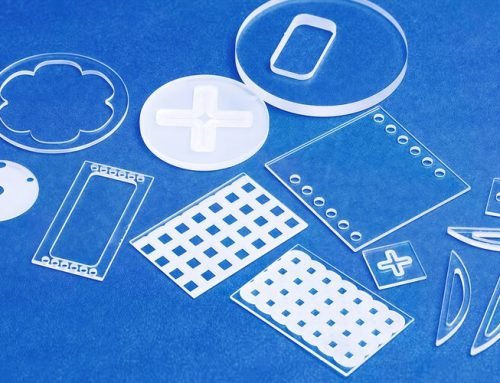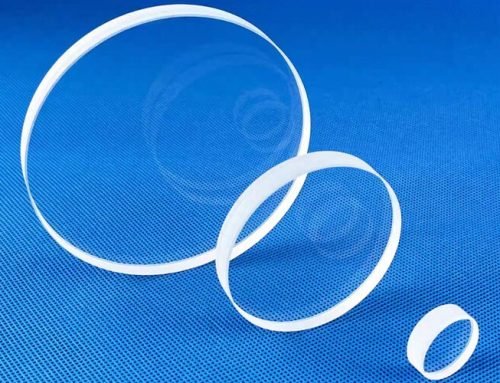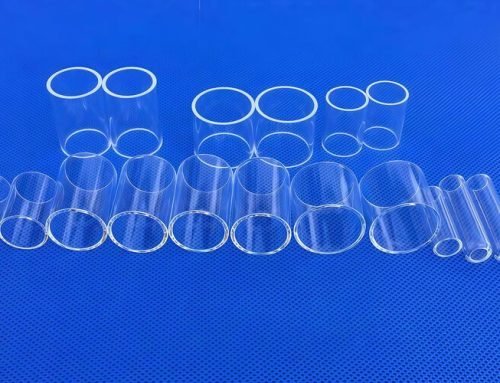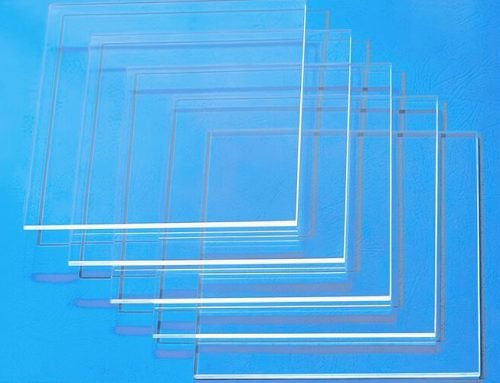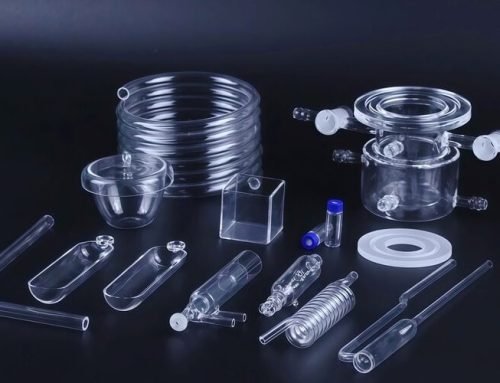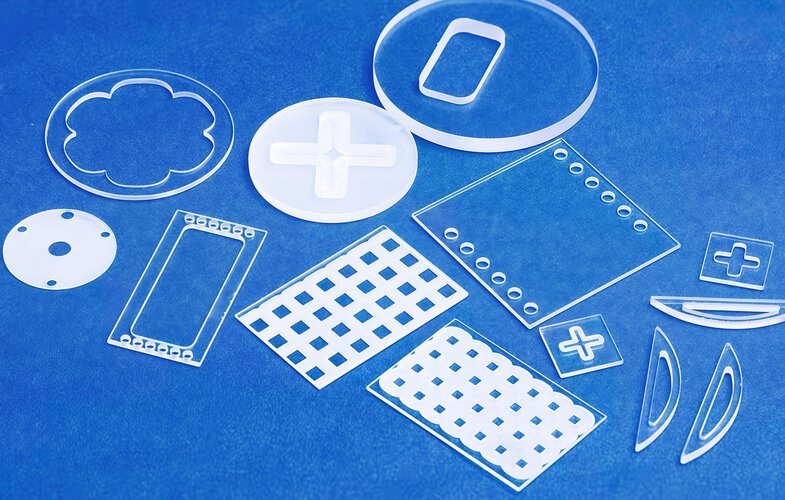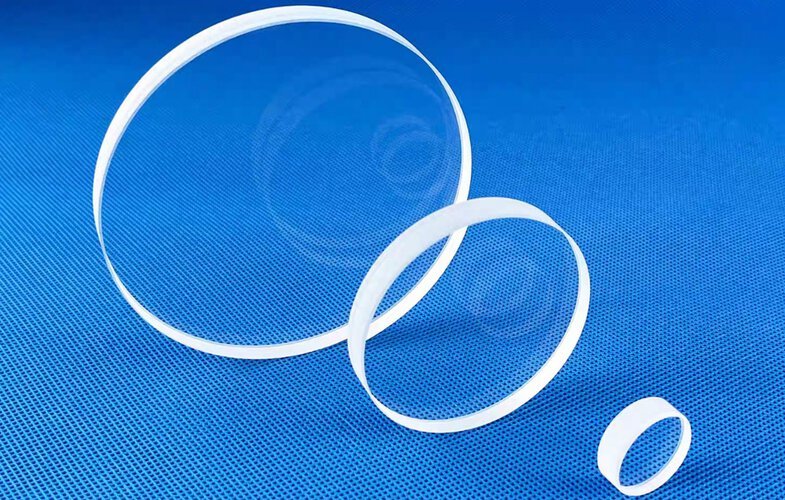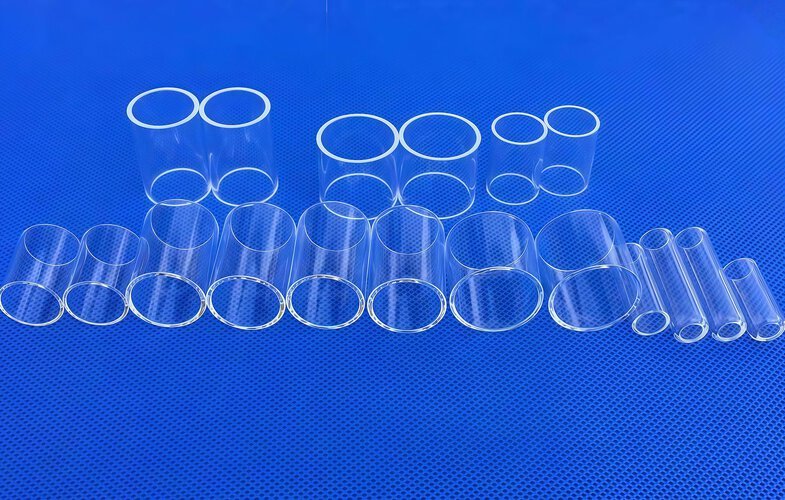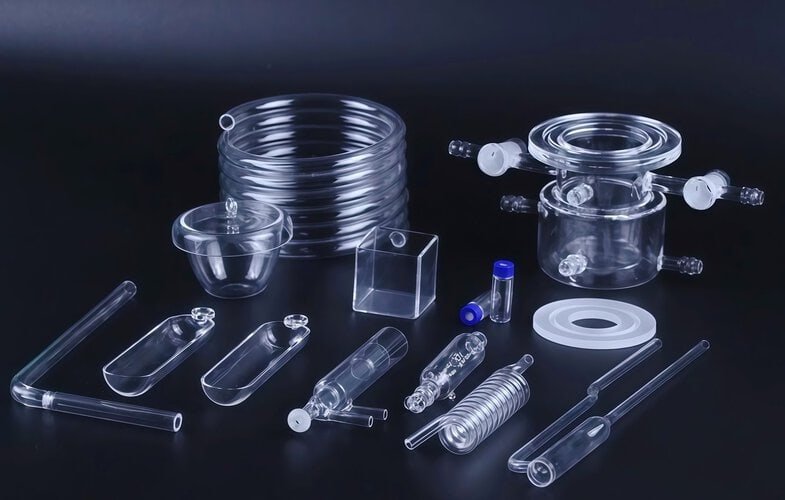
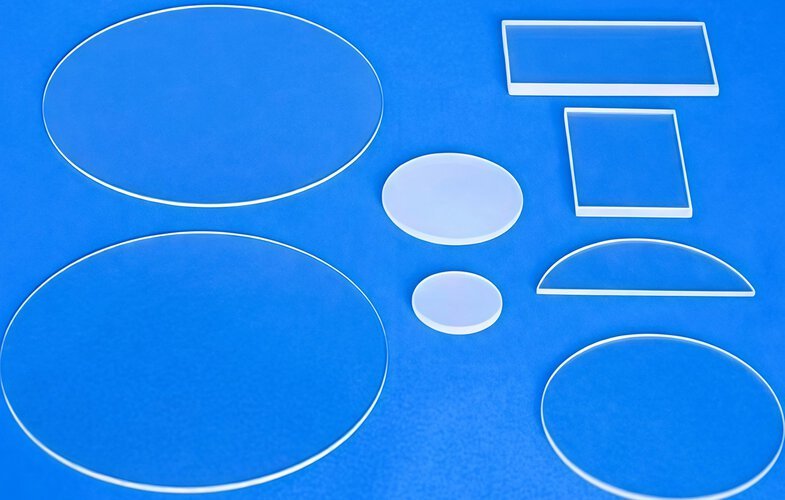
In fields such as optical components, laboratory instruments and semiconductor manufacturing, quartz plates and ordinary glass plates are often used incorrectly due to confusion. While they are similar in appearance, their performance differs significantly. Incorrect selection of glass can lead to a number of issues, including equipment damage and data distortion. Therefore, it is important to be able to accurately distinguish between quartz glass and ordinary glass. The following are several straightforward methods for identifying quartz glass, which can be used by anyone without professional equipment.
- Optical properties represent the most intuitive basis for identification
The fundamental difference between the two materials lies in their internal structure. Quartz, the crystalline state of silicon dioxide, is classified as an anisotropic crystal, while ordinary glass is an amorphous and isotropic substance. In the ultraviolet wavelengths, the molecular structure of ordinary glass strongly absorbs ultraviolet rays, with a light transmittance rate of almost zero. Quartz, by contrast, is capable of transmitting ultraviolet rays with wavelengths exceeding 200nm and is the primary material used in ultraviolet optics.
When a UV flashlight is shone on the test plate, the presence of a distinct light spot formed by the passing ultraviolet light is an indication that the item is likely to be quartz glass. Conversely, ordinary glass leaves almost no visible trace. When observing the quartz plate with a polarizing tool (e.g. polarizing glasses) and rotating the polarizing plate, alternating bright and dark interference fringes will be visible as the angle changes. In contrast, ordinary glass always maintains uniform brightness and darkness. This is a typical feature that sets the crystalline and amorphous states apart.
- Hardness testing is both a cost-effective and reliable method
The Mohs hardness of quartz is 7, which is significantly higher than the 5.5 of ordinary glass. When carrying out the test, it is applicable to scratch the plate being tested against a glass surface. In the case of quartz glass, no traces will be visible on its surface. If an ordinary glass plate be scratched using a quartz plate, a clear scratch will be left on the surface of ordinary glass. If there is no glass available, a steel knife with a Mohs hardness of approximately 5.5 can be used for testing. A steel knife can easily mark ordinary glass, but cannot scratch quartz plates, making it a suitable method for quick preliminary selection.
- Weight and density comparing can also contribute to effective identification
The density of quartz is approximately 2.65g/cm³, while that of ordinary glass is about 2.5g/cm³. Quartz plates of equivalent size and thickness typically have a weight that is approximately 6% higher than that of ordinary glass. When comparing the two materials, it is evident that quartz glass offers a heavier feel, while ordinary glass is significantly lighter. The difference is discernable without the use of tools.
- Heat resistance testing is the most convincing practical method
Quartz has a melting point in excess of 1700°C, and its coefficient of thermal expansion is only one-twentieth of that of ordinary glass. It is not prone to deformation when subjected to sudden temperature changes. When the two materials are placed on the outer flame of an alcohol lamp and then heated for one to two minutes, ordinary glass plate is susceptible to softening, bending and shattering, while the quartz plate only slightly heats up and its shape remains stable. A more rigorous test is to immerse a heated ordinary glass plate in cold water, which will shatter instantly, whereas a quartz plate will remain undamaged. It is a characteristic that is almost without exception.
- Chemical stability can also be used as an additional identification method
Quartz glass is highly resistant to corrosion from acids and alkalis, with the exception of hydrofluoric acid. In contrast, ordinary glass is gradually eroded by strong alkalis. When testing, add a small amount of dilute sodium hydroxide solution to two test plates. After standing for five minutes, blurred corrosion marks will appear on the ordinary glass surface, while the quartz plate surface will remain unaffected. However, it is imperative to exercise caution with regard to the safety of reagents to prevent contact with strong corrosive substances.
When identifying, it is important to avoid misjudgement based on a single feature. For instance, certain high borosilicate glass has heat resistance close to that of quartz, but there are still differences in hardness and density. Combining multiple methods, such as weighing followed by a hardness test, allows for precise identification and avoidance of potential issues arising from mixed use.