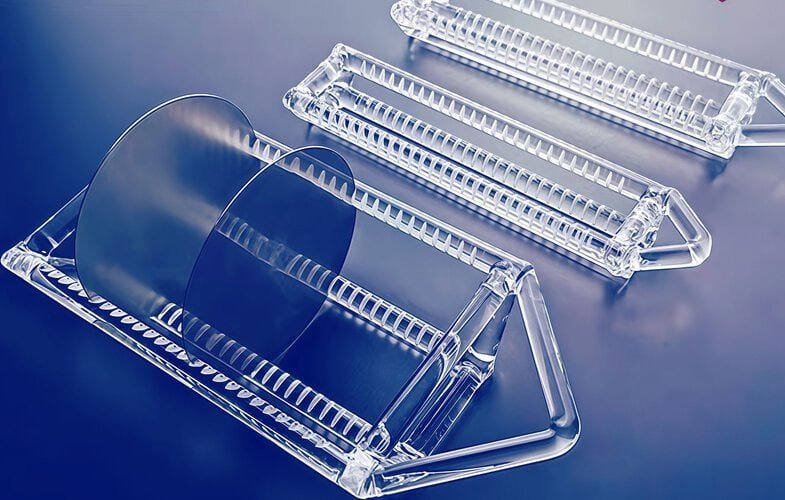
Quartz boats are core components for carrying wafers in fields such as semiconductor manufacturing and photovoltaic thermal processing. The stability of their performance directly determines the temperature uniformity of the thermal process, the accuracy of wafer alignment, and the product yield. Therefore, scientific maintenance throughout the entire process is the key to ensuring their performance.
The daily usage norms are the foundation for maintaining the stability of quartz boats. It is imperative that the principle of handling with care is strictly adhered to when loading and unloading the vessel. Collisions or friction with hard components, such as quartz tubes and metal fixtures, must be avoided in order to prevent surface scratches. Scratches have the potential to accumulate impurities and also cause micro-cracks under high-temperature stress, which can reduce the service life. In order to prevent deformation or rupture of the boat caused by thermal stress resulting from sudden temperature changes, it is essential to control the heating and cooling rates by following a step-by-step approach. It is imperative that the operating temperature is strictly controlled within the upper limit of the rating. Long-term overheating can lead to quartz crystallization and ageing, resulting in reduced strength and hardness of the quartz boat and non-compliance with process accuracy requirements.
Standardized cleaning is the core step in removing residues and restoring performance. Following each hot processing, the most appropriate cleaning method should be selected based on the type of residue. The process for organic residual carbon involves the application of high-temperature dry cleaning as the initial step. The quartz boat should be heated to between 800 and 1000 degrees Celsius in an oxygen atmosphere for 1 to 2 hours in order to thoroughly oxidize the organic residue.
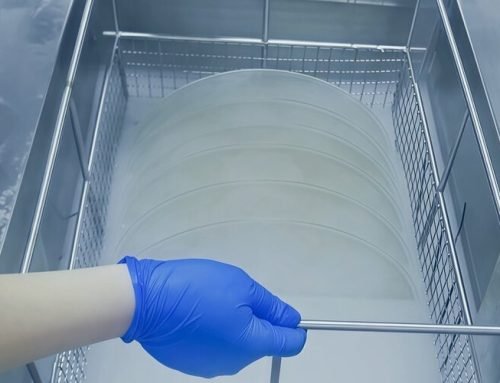
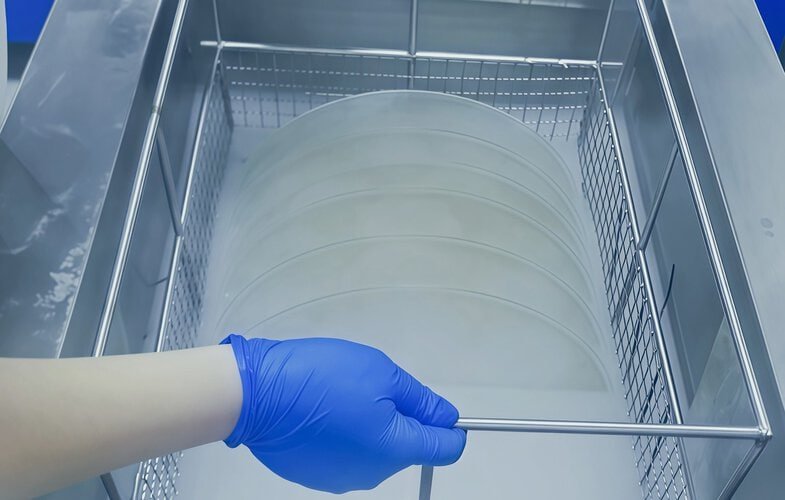
In the case of metal ions and particulate residues, wet cleaning is recommended. Firstly, it is essential to use a high-purity nitrogen gun to blow off any loose particles. The quartz boat should then be immersed in a sub-boiling purified acid washing solution at a temperature of around 80°C for 4 to 6 hours, with low-power ultrasonic cleaning. After cleaning, it is imperative that the boat is thoroughly rinsed with ultrapure water (resistivity ≥18MΩ·cm) and subsequently blown with high-temperature nitrogen, or alternatively vacuum dried, to prevent water stain contamination.
The implementation of storage environment control measures is an effective strategy to mitigate the risk of performance degradation. It is recommended that idle quartz boats be stored in a clean environment. The storage brackets should be made of polytetrafluoroethylene or quartz. It is imperative that they are not placed together with metals to prevent adsorption of metal ions and contamination. Large-sized boats that are not stackable are supported by dedicated layered brackets to prevent long-term stress deformation. The environment should be maintained at a normal temperature and dry, with a relative humidity of no more than 40%. In order to prevent the adhesion of particulate matter, it is recommended that a dust cover be added.
Regular inspection is a necessary step for timely replacement of deteriorated components. Prior to each use or following a cleaning procedure, there are three essential checks to be conducted. Firstly, a visual inspection to ascertain the presence of any cracks, scratches, deformations or surface discolouration. Secondly, a dimensional inspection to verify that the slot spacing and straightness align with the requisite precision standards. Thirdly, surface quality inspection is carried out through contact angle or metal impurity tests to confirm that the residues meet the required standards. In the event of cracks larger than 0.5mm, a slot spacing deviation greater than ±0.1mm, or the presence of impurities exceeding the standard, the quartz boat should be scrapped and replaced in a timely manner to avoid affecting the stability of the manufacturing process.