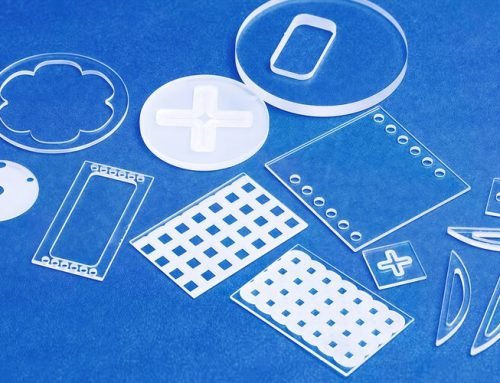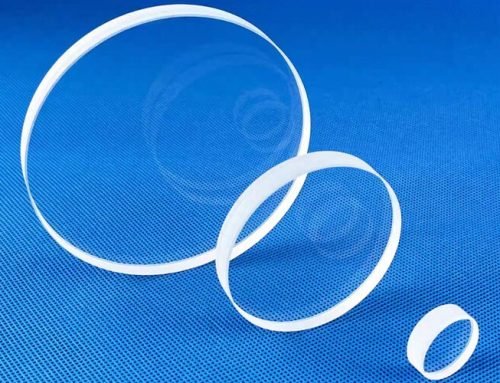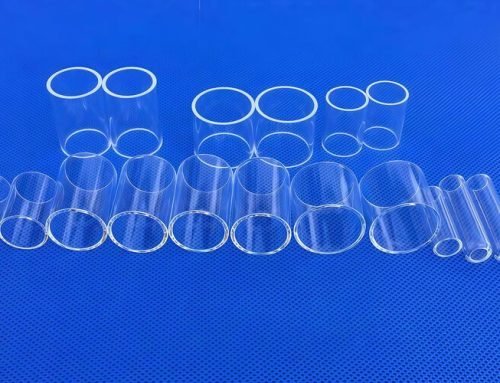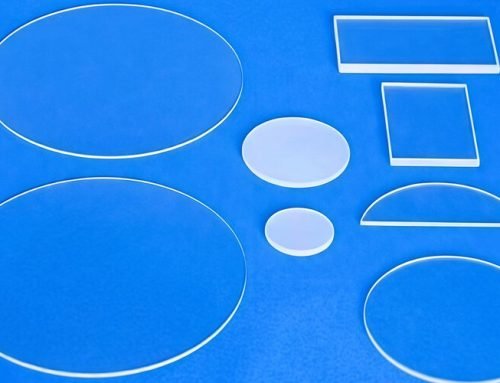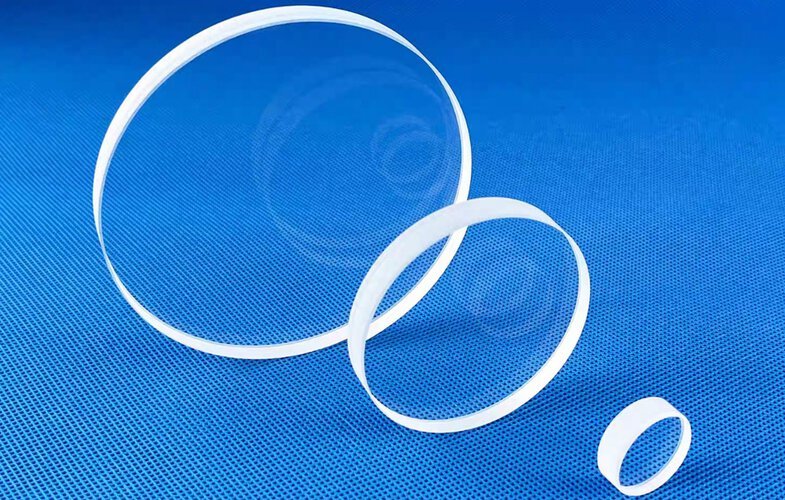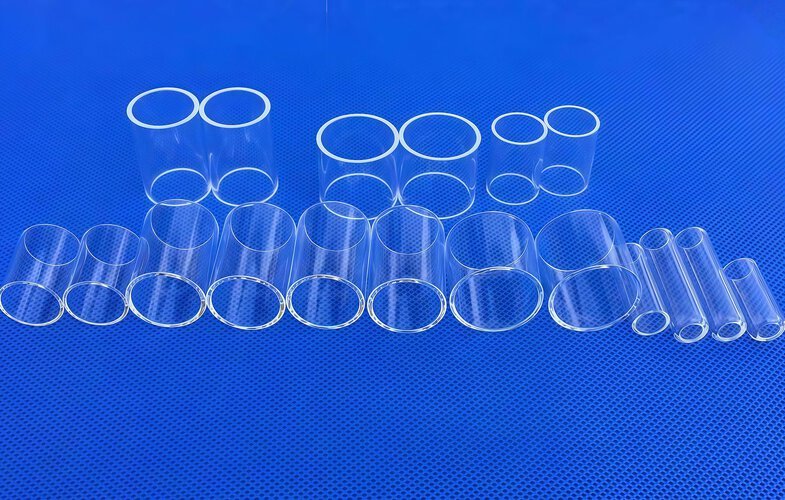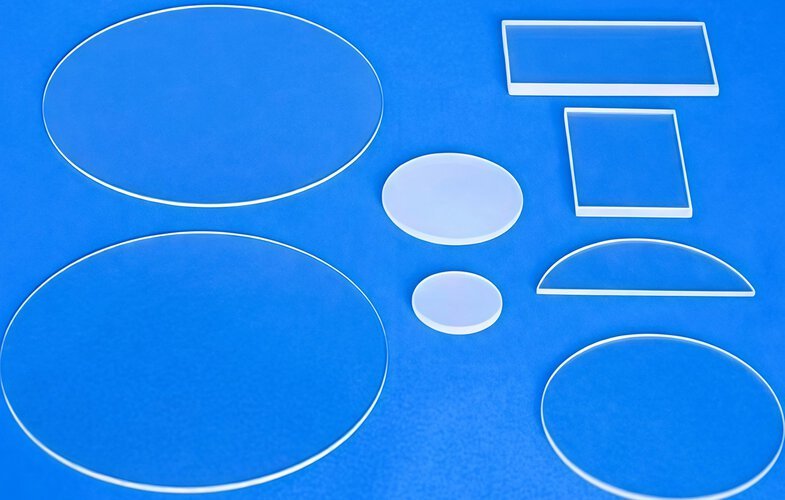
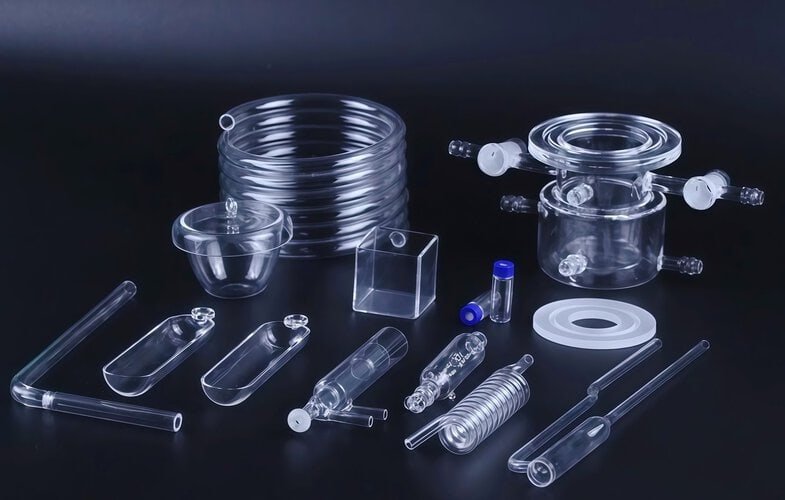
High-temperature resistant quartz glassware is a widely used tool in a variety of fields, including scientific research, optoelectronics and chemical engineering. It consists of quartz glass as its raw material, and is processed through high-temperature melting and precise processing, allowing it to maintain structural stability at relatively high temperatures.
The ability of quartz glass to withstand high temperatures is primarily attributable to its composition and structure. Quartz glass is characterized by its high silicon dioxide content, typically exceeding 99.9%. This high-purity structure has a softening point of almost 1,700 degrees Celsius. Within its standard operating temperature range, the material exhibits minimal coefficient of thermal expansion and excellent thermal shock resistance. Quartz glass is a superior material for experimental processes that require repeated heating and cooling, as it is less likely to crack when the temperature changes rapidly.
Regarding the manufacturing process, the production of high-temperature resistant quartz glassware involves several key steps, including raw material preparation, heating and forming, annealing treatment, cold working and inspection. Following the preparation of raw materials, it is essential to undertake a thorough cleaning and pre-treatment process, based on their purity and particle size, in accordance with the stringent product requirements. During the forming process, flame melting or electric melting methods are commonly used to soften the quartz glass to shape it into the required forms.
For instruments with complex shapes, it is essential to make fine adjustments using numerical control processing and other methods. For instance, in the case of quartz capillaries utilized in optical fibre communication, it is often essential to control the inner diameter deviation at the micrometer level. In the context of chemical research, it is imperative to ensure that the sealing surface of the bottle mouth is flat for reaction vessels. These technical requirements have driven continuous improvements in equipment precision and promoted the subdivision of quartz glass processing techniques.
Annealing is another crucial step in the quartz glassware processing. Quartz glass is known to generate internal stress during the forming process. If the quartz instrument is not properly annealed, there is a risk of breakage due to stress concentration during use. The formed instruments are commonly placed in an annealing furnace, where they undergo a precise heat treatment according to pre-set heating, holding and cooling curves. These curves ensure a uniform internal structure and maintain the excellent long-term durability of the instruments.
Prior to the final products being dispatched from the warehouse, rigorous inspections will be conducted on the high-temperature resistant quartz glassware to ensure its quality and performance. The inspection items include the presence of cracks, bubbles, impurity particles on the quartz glass wall, and the dimensions meeting the requirements of the drawings. For certain products, it is also necessary to test the thermal stability performance of the samples to simulate the actual heating conditions during use.
High-temperature resistant quartz glassware exhibits a wide range of applications. In the field of high-power fibre lasers, quartz glass is utilized in the fabrication of optical lenses, capillaries and isolator components due to its proven capability to withstand high temperatures and effectively transmit beams with high energy density. In the field of electronic laser equipment, quartz glassware is frequently used as insulating, heat-dissipating, or optical path transmission components. In the field of chemical research, quartz crucibles, cuvettes, reaction tubes and similar laboratory instruments are also commonly used. The shape, size and purity requirements for quartz instruments vary across different fields. Therefore, they are usually customized as required rather than produced in completely standardized batches.