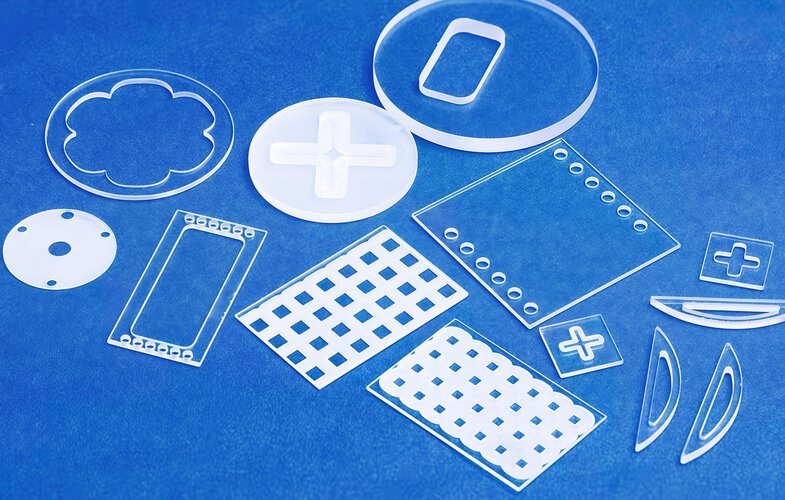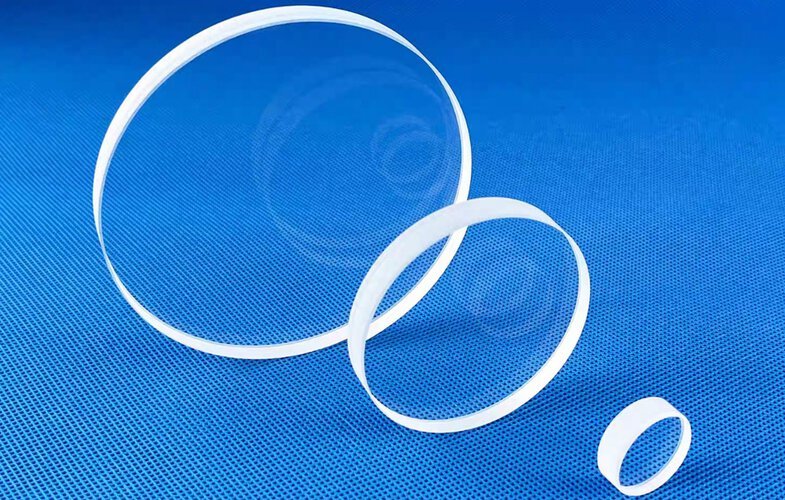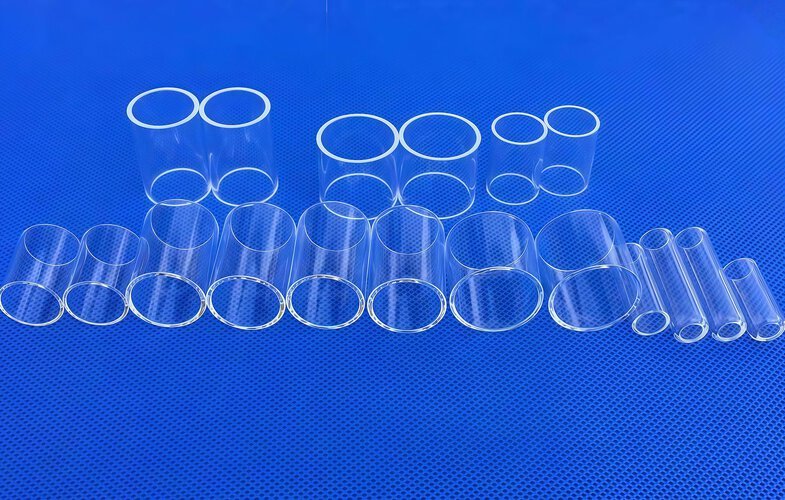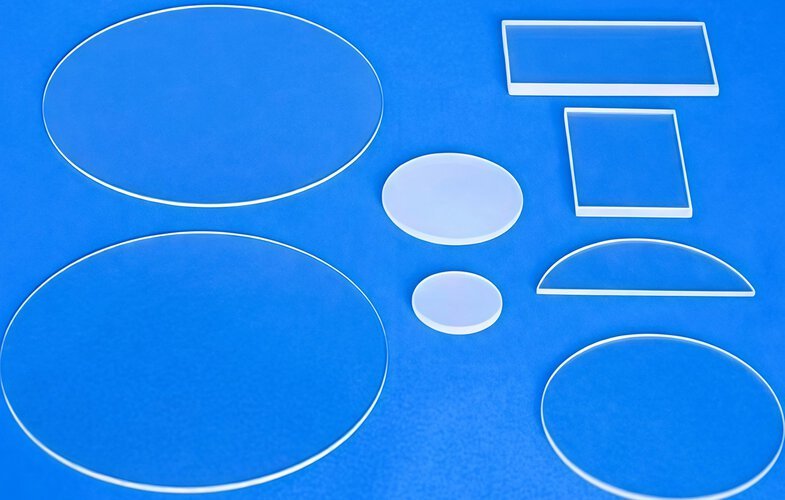
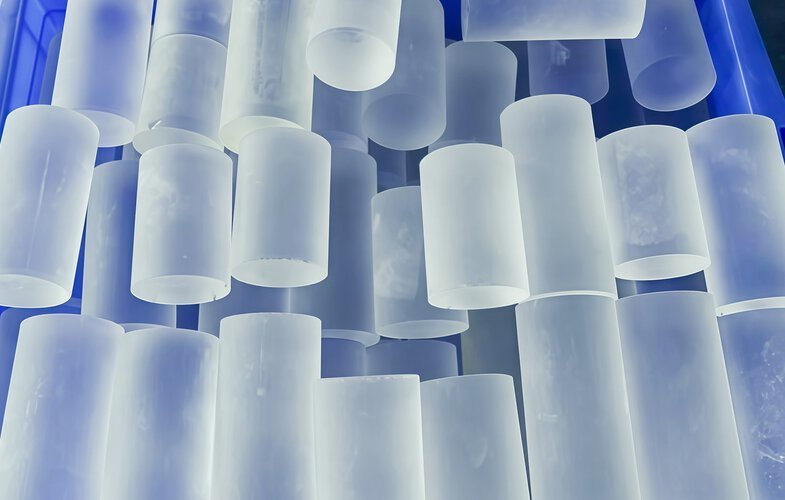
The manufacturing process of quartz glass directly determines its performance grade and application field. The manufacturing of quartz glass can be divided into two primary processes: the melting process, which uses natural quartz as the raw material, and the synthesis process, which uses silicon-containing compounds. The former includes traditional methods such as electric melting, gas refining and plasma melting, while the latter encompasses advanced technologies like chemical vapour deposition and plasma chemical vapour deposition.
The selection of the process must take into account a number of factors, including the purity requirements of the product, optical performance indicators, production costs and terminal application scenarios. In accordance with international standard classification, quartz glass products are divided into two primary categories based on transparency: transparent and opaque. In terms of purity, there are three classifications: high-purity, ordinary and doped. Semiconductor-grade high-purity quartz glass is characterized by its requirement for a total impurity content not exceeding 20 µg. Such rigorous purity standards make raw material processing and process control pivotal elements in the manufacturing process.
- Natural raw material melting process system
- Electric melting technology
The electric melting method is the most popular quartz glass production process nowadays. The core technology involves heating the quartz raw materials in the crucible to over 1800°C by means of electrode heating, thereby achieving melting. The standard processing steps incorporate raw material crushing and screening, wet ball milling for impurity removal, high-temperature melting and rapid quenching.
This method offers several benefits: a relatively low initial capital expenditure, high productivity and suitability for large-scale quartz glass ingot production. The core challenge of the electric melting method lies in the control of raw material purity. Due to the fact that metal impurities are difficult to volatilize and remove at high temperatures, the content of impurities such as Al and Fe in the final quartz products is usually high.
- Gas refining method and plasma melting process
The gas refining method utilizes a hydrogen-oxygen flame as the heat source, gradually melting quartz sand layer by layer through the flame for deposition and shaping. This process is highly effective in reducing metal impurities; however, it does introduce a relatively high hydroxyl content. Its wide range of applications includes semiconductor diffusion tubes and optical fibre preforms.
The plasma melting method uses high-frequency plasma to generate ultra-high temperatures of over 3000°C. This can effectively decompose impurity compounds in raw materials and control the hydroxyl content through a vacuum environment. However, the investment required for plasma equipment is significant, and at present, its application is limited to high-end fields such as aerospace.
- Chemical vapor deposition advancement
Chemical vapor deposition (CVD) is the core process for preparing ultra-high-purity quartz glass. It uses SiCl4 or SiH4 as raw materials and undergoes reactions in a hydrogen-oxygen flame. By adopting multi-burner deposition technology, large-diameter quartz glass blanks with excellent optical uniformity can be produced. This type of material has a high laser damage threshold and is widely used in laser nuclear fusion projects such as the national ignition facility.
Quartz glass technology is evolving in three key areas in the future: ultra-large size, ultra-high purity and functional integration. The implementation of new technologies, including artificial intelligence-assisted process optimization and digital quality control, has led to significant advancements in the field. It is anticipated that the consistency and stability of quartz glass product performance will be further enhanced.