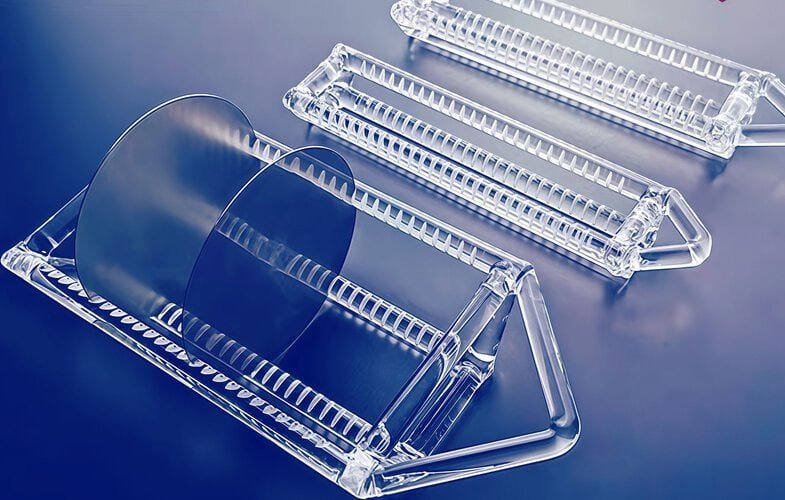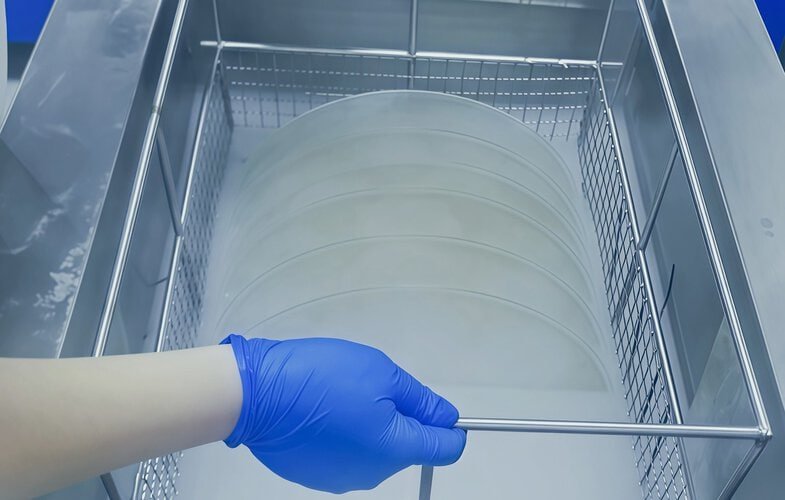
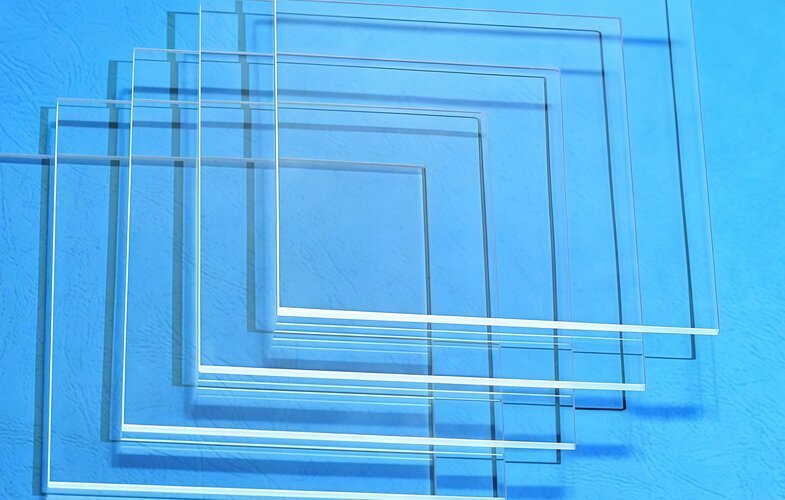
Quartz plate is a material that is used extensively in electronics, optics and communication. Its production involves quartz crystal growth, cutting, polishing and coating. The following section will provide a detailed overview of quartz plate production.
Quartz crystal growth represents the initial stage in the manufacturing process of quartz plates. Quartz crystal consists of silica (SiO2), and its crystal structure is stable, boasting excellent physical properties, which explains why it is widely used in the fields of microelectronics and optics. Quartz crystal growth methods can be categorized as gas phase, liquid phase and melt growth.
Vapor phase growth method refers to the growth of quartz crystals on the substrate by the reaction of oxygen and silicon source material in the reaction chamber at high temperatures. The quartz crystals produced by this method are of a higher quality, but the cost is higher, and they are generally suitable for the production of high-end products.
Liquid phase growth method refers to the silicon source material dissolved in molten quartz, quartz crystal growth under certain temperature and pressure conditions. The quartz crystals produced by this method are of a higher quality, but the cost is slightly higher.
The melt growth method involves the amalgamation of silicon source material and other additives, followed by their melting and cooling into crystals under specific temperature conditions. This method yields quartz crystals at a relatively low cost, though with a slightly lower quality.
Following the conclusion of the quartz crystal growth process, the subsequent steps involve cutting, polishing and coating. The term ‘cutting’ in this context refers to the process of dividing quartz crystals into sheets of various shapes and sizes to meet specific requirements. The most commonly used cutting processes include wire saw cutting, cutting and high-precision comb cutting.
The process of polishing refers to the mechanical refinement of the surface of a quartz plate subsequent to cutting, with the objective of achieving a smooth and flat surface that enhances both the performance and the aesthetic appeal of the plate. The most commonly used polishing methodologies are mechanical polishing, chemical mechanical polishing and electrochemical polishing.
Coating refers to the deposition of a thin film on the surface of a quartz plate to improve its wear resistance, optical properties and electrical properties. Commonly used coating materials are alumina, silica, fluoride, etc.
In general, quartz plate production technology involves several stages such as quartz crystal growth, cutting, polishing and coating, and each stage has its own specific process and requirements. Through continuous improvement of technology and process, production efficiency and product quality can be improved to meet the needs of various fields.