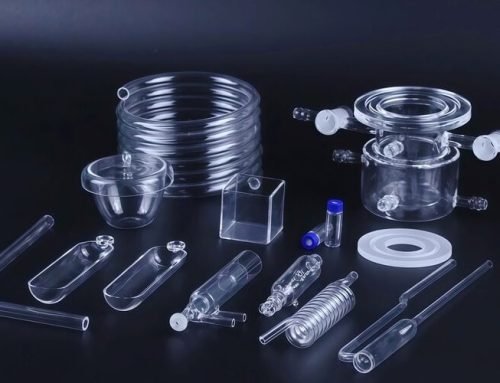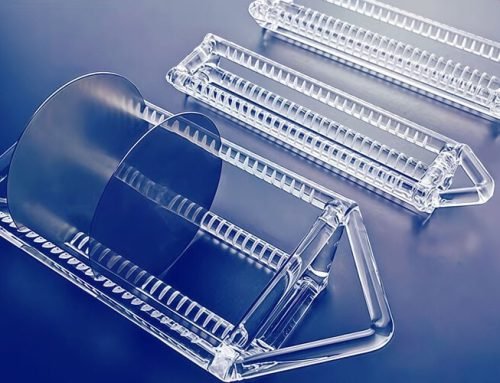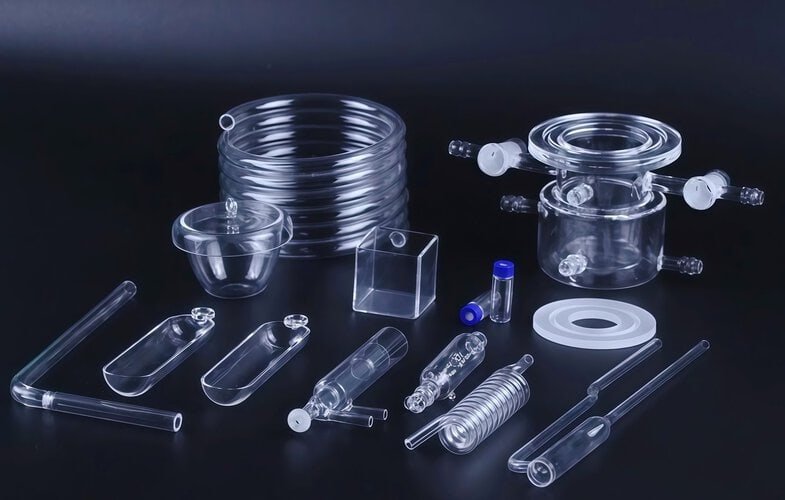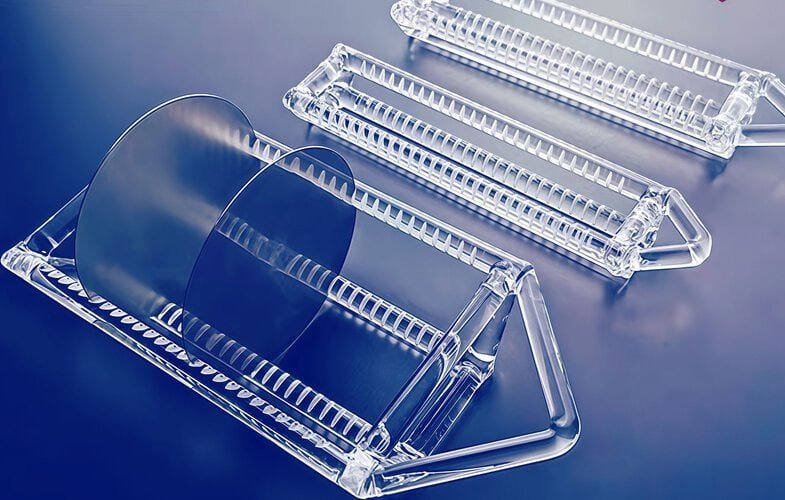
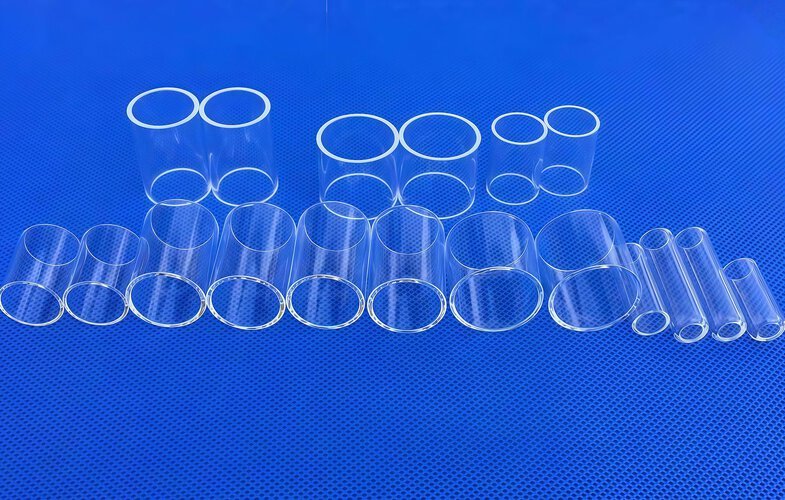
High-purity quartz tubes are defined as tubular quartz glass products manufactured by melting high-purity silica as a raw material through a specific process. The silicon dioxide content of the material is typically above 99.99%, and it is characterized by high-temperature resistance, corrosion resistance, good light transmittance and excellent electrical insulation. Its utilization is pervasive in domains of high-end manufacturing, including semiconductors, photovoltaics, optics, chemical engineering and scientific research.
- The production process of high-purity quartz tubes
The manufacturing processes of high-purity quartz tubes principally comprise the gas refining method, the electric melting method and the two-step method. The gas refining method involves utilizing a hydrogen-oxygen flame as the heat source, melting high-purity quartz powder and depositing it on a rotating target seat. Following the formation of the blank tube, it undergoes a series of processes, including annealing, cutting, and other procedures, to yield the final product. The quartz tubes produced by this process have a comparatively low hydroxyl content, rendering them suitable for use in the optical and semiconductor fields. The electric melting method uses resistance heating or arc melting, which exhibits a comparatively high production efficiency. However, the content of bubbles and impurities in quartz tubes produced by this process is relatively high. As a result, its utilization is often in industrial scenarios where the requirement for light transmittance is not high. The two-step method combines the advantages of gas refining and electric melting, thereby enabling the manufacturing of large-diameter and highly uniform quartz tubes, which meet the high-end demands for photovoltaic and semiconductor diffusion furnace tubes.
- Technical capabilitiesdemonstrated in the production of high-purity quartz tubes
The technical capabilities involve the ability to control the purity of raw materials, the stability of melting processes, the processing capacity for dimensional accuracy, and the means of quality inspection. The particle size distribution of high-purity quartz raw materials, the presence of impurity elements, and the degree of elimination of bubbles and streaks are all pivotal factors in determining the quartz tube grade. Semiconductor-grade quartz tubes, for example, are subject to stringent requirements with regard to metal impurities. The content of elements such as sodium, potassium, and iron must be controlled below one part per million.
- The main application fields of high-purity quartz tubes
In the semiconductor industry, it is utilized as diffusion furnace tubes, oxidation furnace tubes, quartz boats, and quartz crucibles, to facilitate high-temperature diffusion, oxidation, annealing, and other processes integral to the chip manufacturing process. In the domain of photovoltaics, quartz is used in crucibles in polycrystalline silicon ingot casting furnaces, tubes in single crystalline silicon drawing furnaces, and tubes for solar cell diffusion furnaces. In the fields of chemical engineering and metallurgy, quartz is utilized as corrosion-resistant reaction tubes, thermocouple protection tubes, and crucibles for precious metal smelting. In the fields of scientific research and medical care, quartz is utilized for the fabrication of high-purity instruments in laboratories and biological sterilization equipment.
- The key indicators to pay attention to when choosing high-purity quartz tubes
The content of hydroxyl groups in high-purity quartz tubes exerts a direct influence on both their infrared absorption and temperature resistance. The low-hydroxyl quartz tube has been demonstrated to be suitable for utilization in high-temperature and high-frequency environments. The uniformity of the material, as indicated by its presence of bubbles and stripes, affects both its light transmittance and mechanical strength. Dimensional tolerance is the key factor determining the degree of matching between the tube material and the supporting equipment, since the high-precision processing can reduce the installation stress. The concept of temperature resistance is typically denoted by two key parameters: the softening point temperature and the long-term service temperature.
In conclusion, the manufacturing of high-purity quartz tubes is of fundamental importance to the contemporary manufacturing industry. The quality of quartz tubes is directly related to the stability and yield of downstream processes. It is imperative for industries to comprehend the classification, process and performance indicators of high-purity quartz tubes in order to facilitate the selection of the most appropriate solution for their specific working conditions, thereby enhancing the operational efficiency of the equipment and the reliability of the products.