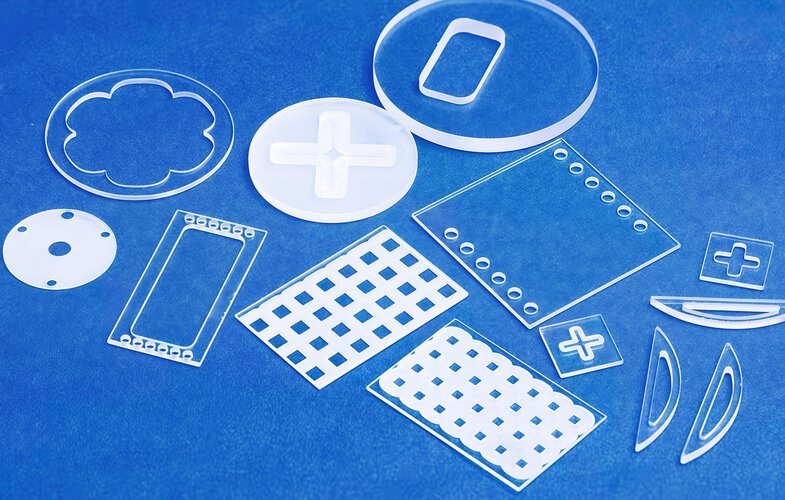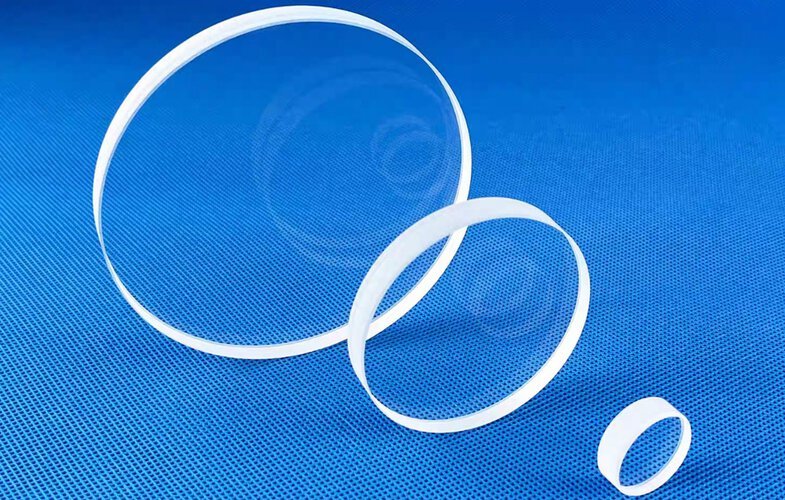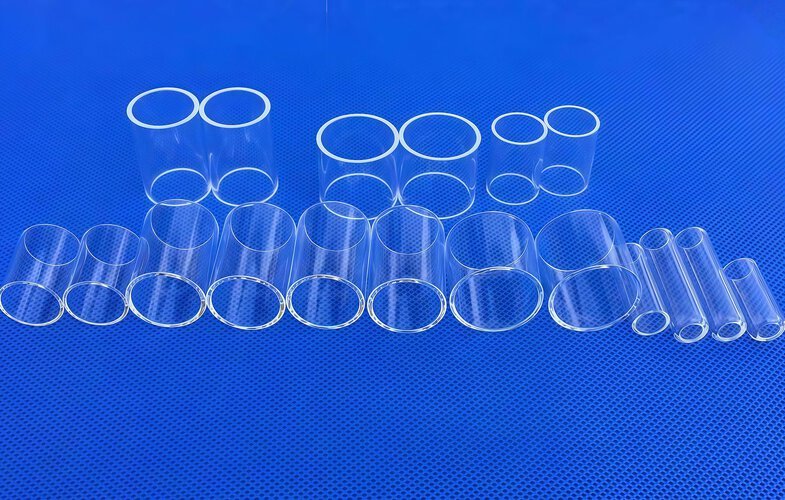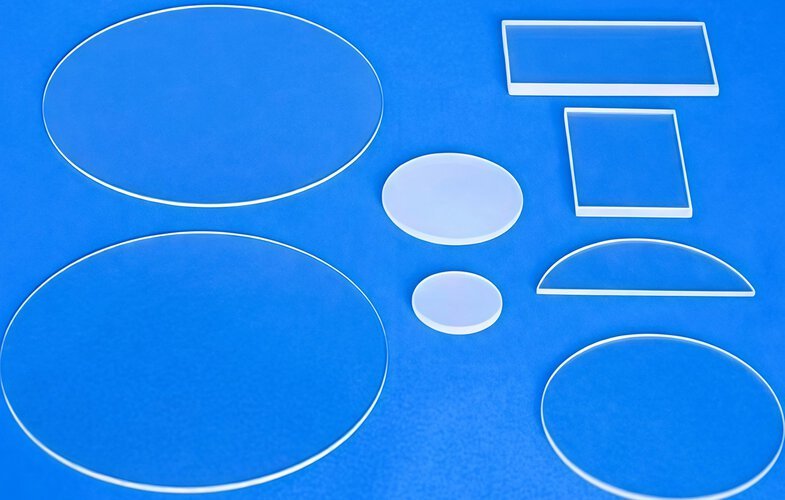

Quartz plates are functional materials that possess optical uniformity, piezoelectricity, and mechanical stability. These components are widely used in high-end fields such as optical sensing, 5G communication, and semiconductor manufacturing. The precision with which quartz cuts is directly linked to the reliability and longevity of its downstream applications. It is important to note that there are significant differences in precision performance under different processes and application scenarios.
Dimensional tolerance represents a fundamental precision requirement for quartz plates, typically denoting the variation between the designed diameter or length of a single piece post-cutting and the actual measurement. For conventional quartz plates with a thickness of over 50μm, when the mature diamond wire cutting process is adopted, the dimensional tolerance can be reliably controlled within ±1μm. Adopting ultra-precision CNC diamond wire cutting, combined with tension and path compensation technology, can achieve an accuracy of approximately ±0.2μm, with an error margin of only 1/500 of the diameter of a human hair.
In the field of piezoelectric quartz plates, the crystal angle deviation direction is the most critical aspect in ensuring the accuracy of the plates. This deviation directly impacts the resonant frequency stability. For instance, in the case of AT-cut quartz plates used in 5G communication, the crystal direction of the cut must strictly correspond to the design value. The normal industry generally requires control of the crystal direction angle deviation within ±2 arc seconds, while high-end resonators require even more stringent standards, allowing deviations of only ±0.5 arc seconds. If this deviation exceed the acceptable range, then there is a risk of significant drift in the resonant frequency, which can lead to an increase in the bit error rate of the communication signal, thus affecting the quality of network transmission.
The flatness and parallelism of the plates determine their application performance. The flatness requirement for conventional optical quartz plates is usually λ/4 (about 137.5nm, calculated at a visible light wavelength of 550nm), and the parallelism is approximately 1 arc minute. The quartz lens substrate, which is used in laser systems, is highly precise, with a flatness of approximately λ/20 (about 27.5nm). Its parallelism is controlled to within ±2 arc seconds, and its error level is down to the molecular level.
The primary sources of quartz plate cutting errors can be categorized as either internal or external. The internal factor is the internal stress of the quartz crystal itself. Natural or artificially grown quartz crystals exhibit microscopic stress inhomogeneity, and the stress released during cutting contributes to local deformation. External factors include thermal effects during the cutting process, equipment precision errors, clamping deformation, etc. Currently, the optimization of cutting parameters and the introduction of error compensation algorithms allows for the effective reduction of these errors to an negligible range, satisfying the requirements of most high-end applications.
Overall, the current cutting accuracy of quartz plates is sufficient to meet the requirements of the vast majority of high-end fields. In standard scenarios, the error typically occurs at the micrometer level. In high-end scenarios, the error can reach the sub-micrometer or even nanometer level, with a magnitude far smaller than the allowable threshold of product design. Nevertheless, for ultra-thin plates with a thickness of less than 5μm, the control of cutting errors remains a difficult issue in the industry. Further research and development is required in order to advance clamping technologies and non-contact cutting processes, with a view to achieving higher precision requirements.