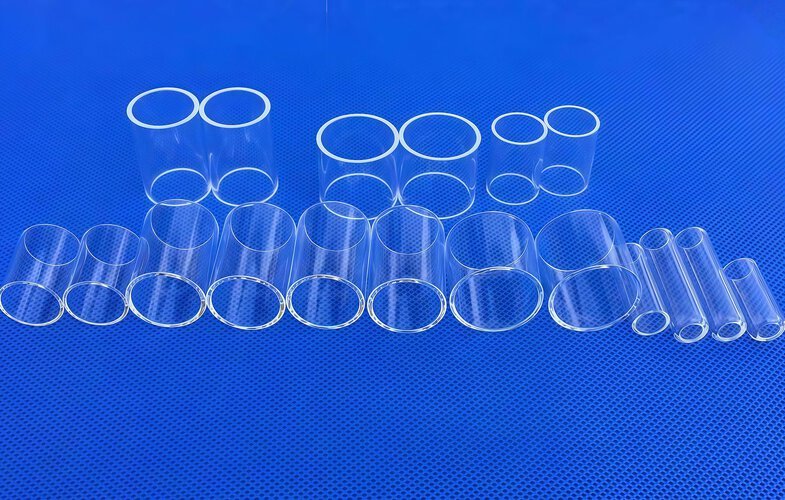

Quartz plates are extensively utilized in a variety of professional settings, including optical instruments, semiconductor lithography, laser systems and high-end sensors. This is due to their exceptional thermal stability, high optical transmittance and superior mechanical strength. The quality of the installation of quartz plates directly determines the accuracy, stability and service life of the equipment. Quartz is a brittle material, which must be taken into consideration. The thickness of some functional quartz plates is only a few hundred micrometers. Even minor uneven stress, contamination or improper force application during installation has the potential to lead to a reduction in the optical performance of the quartz plates, or even result in cracking.
- Preparations before installation
Before the installation process commences, it is imperative that the three core controls are completed. Firstly, the quartz plates are inspected for any defects. Employ a white light interferometer or high-powered magnifying glass to verify the absence of any processing defects, such as scratches, edge breakage, or pockmarks, on the surface. Furthermore, ascertain that the thickness and diameter deviations are within the established tolerance range. Concurrently, the initial internal stress measurement was conducted using a polarizer. The second method is the pretreatment of the supporting accessories. The pressure rings, flanges, sealing rings and associated components require ultrasonic cleaning with isopropyl alcohol to remove oil stains and metal shavings. This process ensures that no silicone oil residue is left behind and avoids contamination of the quartz surface. The third aspect is environmental control. The installation area should be a dust-free environment of Class 1,000 or above, with the temperature controlled at 20±5℃ and the humidity at 40% to 60%. Sudden temperature changes or condensation should be avoided.
- The core operational points of the installation process
The common installation methods of quartz plates are press-fitting, pasting and edge-clamping, and the details of each method vary significantly.
- Press-fitting
The diagonal alternating method should be used to tighten the screws. It is strictly prohibited to tighten one side at a time. The pressure ring must be aligned with the edge of the non-working surface of the quartz plate and must not be pressed into the working surface. The sealing ring should be placed in the centre and must not be inserted into the gap. It is recommended to use fluororubber or nitrile rubber materials that are free from silicone.
- Pasting
This is only applicable to quartz plates that do not require the transmission of core light paths. Please select either an optical-grade UV curing adhesive or a low-stress epoxy adhesive. The adhesive should be applied with a thickness of 20-50μm along the edge. During the curing process, it is essential to apply a uniform pressure of approximately 1kPa. Any adhesive that has been spilled should be cleaned up promptly using anhydrous ethanol.
- Edgeclamping
The clamping points can only be set at the edge of the non-working surface, and the single-direction clamping width shall not exceed 10% of the total diameter. For thin quartz plates with a thickness of less than 1mm, aluminium or ceramic support rings must be installed to prevent sagging and deformation in the middle.
- Verification and adjustment after installation
The first stage of the process is a visual inspection to ensure that the quartz plate has no new scratches or chipped edges, that the pressure ring is not skewed, and that the screws are properly secured. The second is the optical performance test. A wavefront sensor is used to detect wavefront distortion. The wavefront error of the core quartz plate should be less than λ/10 (where λ is the working wavelength). If the birefringence is detected by a polariser and the interference fringes are uniform, then the stress can be qualified.
The installation of quartz plates is a precise and standardized process. Every detail, from defect detection to stress control, directly affects the performance of the equipment. During installation, it is important to avoid violent operation, non-standard torque control and contamination residue in order to maximize the performance of the quartz plates and extend their service life.