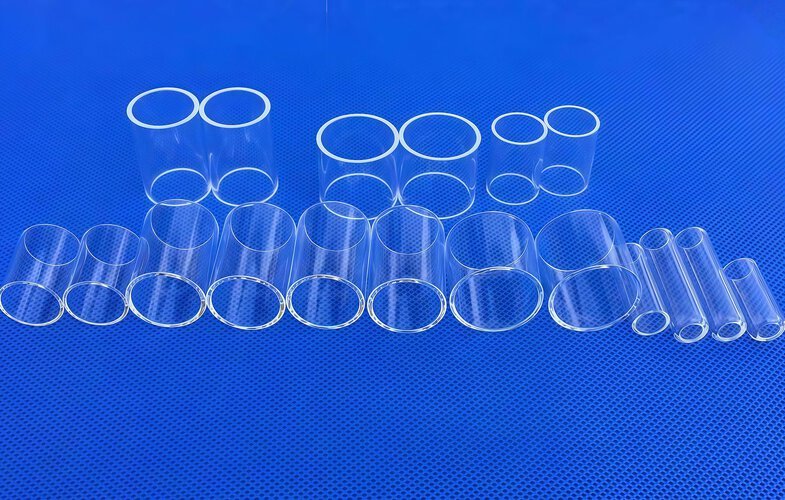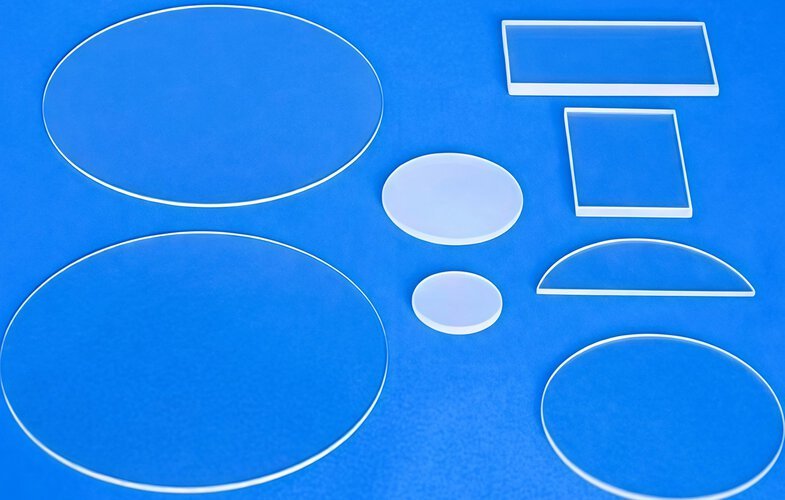
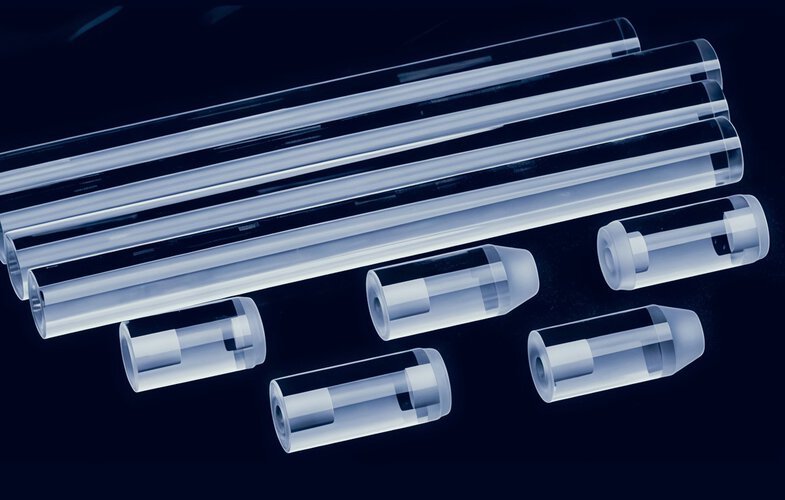
Quartz rods are widely used in a variety of fields due to their characteristics, which include high temperature resistance, high light transmittance and low coefficient of expansion. These characteristics make them suitable for use in a range of areas including semiconductors, optics, photovoltaics, metallurgy and other fields. The quality of quartz rods has been demonstrated to have a direct impact on the performance and service life of the equipment. However, the majority of users lack the necessary professional testing instruments. The following article proposes a number of simple identification methods to facilitate rapid assessment of the quality of quartz rods.
- Visual inspection
The most readily observable indicator is that of appearance. It is imperative that high-quality quartz rods exhibit the following characteristics.
- No bubbles or microbubbles
When observed under bright light, high-quality quartz rods should be free of visible bubbles to the naked eye. In the event of the presence of minute bubbles, it is imperative to ensure that their number is negligible and that they are distributed uniformly, with no concentrated clusters.
- Free of impurities and color centers
The presence of any black, white or other coloured impurity spots on the surface or interior is to be avoided. Simultaneously, it is imperative to evade the manifestation of colour centers, such as purple and brown.
- No cracks or scratches
It is imperative to ascertain the presence of any longitudinal or transverse cracks that may be evident on the surface. The depth of the scratch should measure less than 0.05mm. Scratches that are too deep will become stress concentration points, affecting the flexural strength.
- Surface flatness
The surface should be touched gently with the hand. The surface should be free of any roughness or unevenness. The surface of high-quality quartz rods is meticulously refined to achieve a smooth and polished finish.
- Dimensional accuracy verification
- Diameter tolerance
The diameter of the quartz rod should be measured at different positions using a vernier caliper. The tolerance for high-quality products should be maintained within ±0.1mm. In the event of a deviation of this magnitude, it can be deduced that the forming process is not precise.
- Straightness
The quartz rod should be placed on a flat surface and rotated slowly to ascertain whether any obvious jumping occurs. Alternatively, a ruler may be applied to the rod with a slight degree of pressure to ascertain the size of the gap.
- Preliminary judgment of light transmittance
- Visible light transmission
The quartz rod should be held against a strong light source and observed to ascertain whether the light passes through evenly without obvious turbidity or obstruction. An appearance that is “foggy” or “shadowy” is indicative of an excess of impurities or bubbles within the substance.
- Ultraviolet/infrared light transmission
A quartz rod is to be illuminated with an ultraviolet flashlight. The ability of the light to pass through and induce a glow in the fluorescent substance is indicative of optimal ultraviolet transmission. Infrared light transmission may be achieved by applying heat to the rod, thus enabling the detection of whether the temperature is transferred equally at both extremities. High-quality quartz is characterized by its high infrared transmittance and rapid heat transfer properties.
- Heat stability testing
A small sample should be taken, and then heated to 800-1000°C using an alcohol lamp or blowtorch. This should be held for 10 seconds, and then the sample should be quickly placed in cold water in order to observe whether there are any cracks or deformations. High-quality quartz rods offer a number of key benefits, including a low coefficient of thermal expansion, strong thermal shock resistance and durability. Inferior products may break due to thermal shock caused by impurities or process defects.
- Rapid assessment of mechanical strength
Quartz has a Mohs hardness of 7, meaning it is capable of scratching ordinary glass. If a mark can be left with ease on the surface of ordinary glass, it indicates that the hardness of the quartz rod meets the standards. In the event of the quartz rod exhibiting scratches, this is indicative of substandard quality.
- Simple verification of chemical purity
The chemical purity of quartz rods has a direct impact on their corrosion resistance. A few drops of dilute hydrochloric acid (10% concentration) should be added to the surface, left for 5 minutes, wiped clean, and then inspected for any corrosion marks, such as spots or discolouration. High-quality quartz displays minimal reaction, while lower-grade products may exhibit signs of degradation, such as the formation of bubbles or surface dissolution.