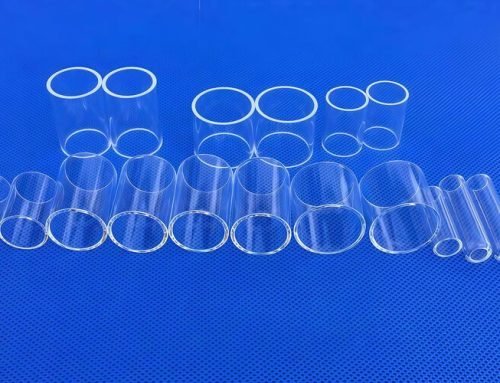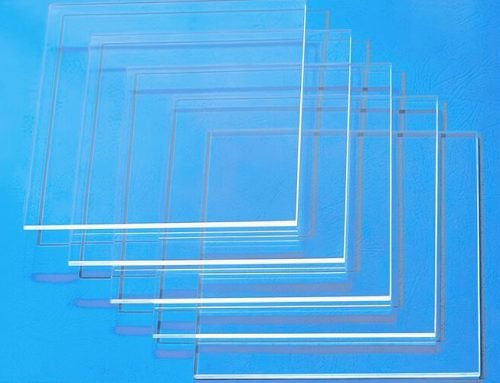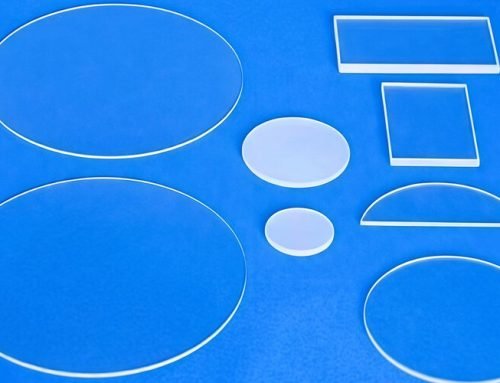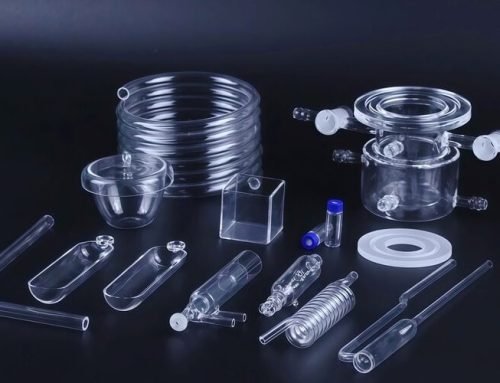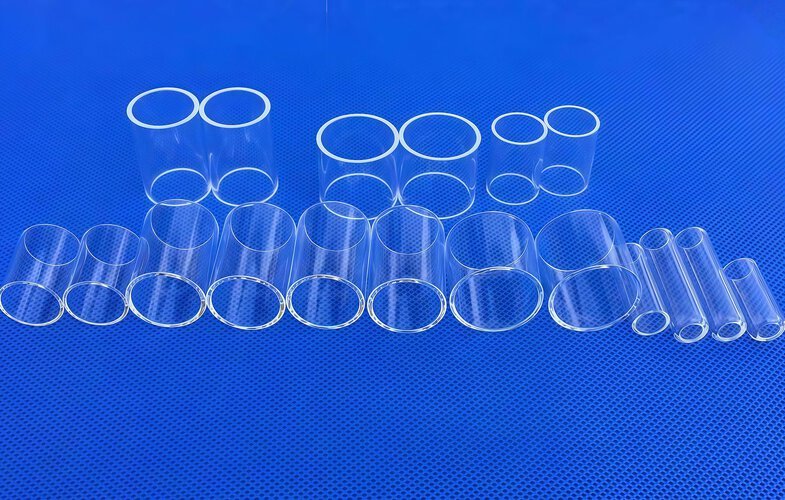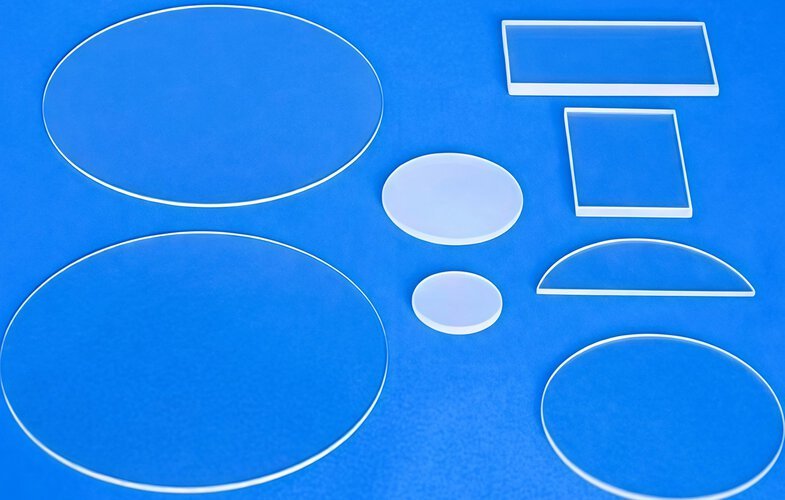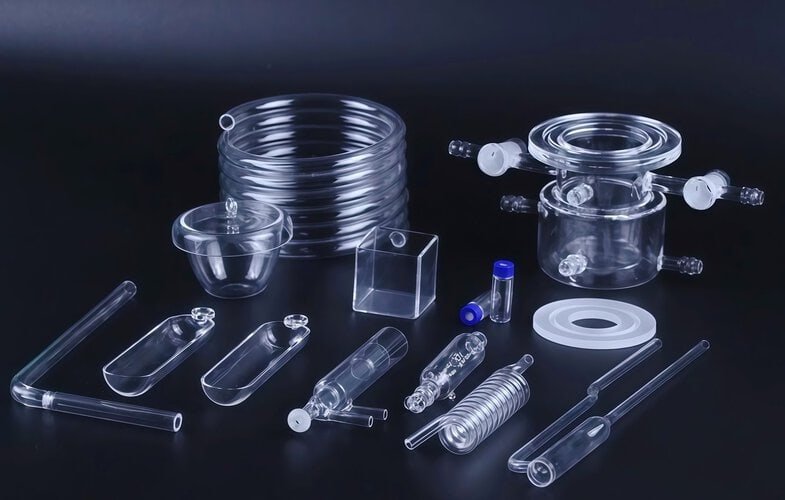

Quartz glass, as a high-performance optical material, plays a critical role in optical microscopy. This article examines the significance of quartz glass in optical microscopes by analyzing its optical properties, mechanical stability, and applications in specific microscopy techniques.
- The optical properties of quartz glass
Quartz (SiO2) is a material which boasts excellent optical properties, particularly when it comes to light transmittance. It is especially effective in the ultraviolet (UV) to near-infrared (NIR) spectral range. This characteristic makes it an ideal optical window or sample container in optical microscopes.
- High light transmittance
Quartz glass exhibits an exceptionally high optical transmittance (typically exceeding 90%) across the ultraviolet, visible, and near-infrared spectral ranges, significantly outperforming conventional glass. This superior transmittance renders quartz glass particularly critical in microscopy applications that rely on light at specific wavelengths, such as fluorescence and ultraviolet microscopy. For example, in fluorescence microscopy, where ultraviolet and blue light are used as excitation light, quartz glass efficiently transmits such short-wavelength light while minimizing optical energy loss.
- Low autofluorescence
The autofluorescence of quartz material is exceptionally low, which is of the utmost importance for high-sensitivity fluorescence imaging. Ordinary glass or plastic sample containers may produce background fluorescence under ultraviolet light excitation, which can interfere with the true signal of the sample. Quartz glass is known for its ability to minimize fluorescence noise, thus optimizing the signal-to-noise ratio and enhancing the clarity and detail of imaging results.
- Low optical distortion
Quartz is characterized by a uniform refractive index and exceptional optical uniformity, which contributes to reduced light scattering and aberration. In the illumination optical path or sample support structure of a microscope, quartz glass can ensure the stability of light propagation and prevent image distortion caused by uneven materials.
- Mechanical and chemical stability
The mechanical strength and chemical inertness of quartz glass give it significant advantages in microscope sample processing and long-term experiments.
- High mechanical strength
Quartz is a highly durable material with a relatively high hardness (Mohs hardness 7) and excellent scratch resistance. For instance, quartz glass can maintain its structural integrity when samples require high-temperature or high-pressure treatment.
- Chemical inertness
Quartz is characterized by its highly effective resistance to corrosion when exposed to a wide range of acids, alkalis and organic solvents, with the exception of hydrofluoric acid and hot phosphoric acid. This feature renders it suitable for scenarios involving exposure to corrosive substances in biological, chemical or materials science experiments. For instance, when observing cell cultures or chemical reactions, quartz glass will not release impurities due to solvent erosion, thus avoiding sample contamination or interference with experimental results.
- Application in specific microscopy techniques
- Fluorescence microscope
As discussed, quartz glass is an ideal container for fluorescently labeled samples such as cells and proteins due to its low autofluorescence and high ultraviolet transmittance. Quartz glass is an essential component of confocal and multiphoton microscopes, as it ensures the efficient transmission of excitation and emission light.
- Ultraviolet microscope
Ultraviolet microscopes utilize short-wavelength light to enhance resolution (resolution is inversely proportional to wavelength). Quartz glass is a highly versatile material that can transmit ultraviolet light and support high-resolution imaging, making it suitable for a range of applications including semiconductor testing and nanomaterial research.
- In situ test observation
In the context of chemical reactions, electrochemistry, or high-temperature experiments, quartz glass can be utilized as a direct reaction vessel, enabling real-time dynamic observation under a microscope. For instance, quartz electrolytic cells are an essential component of research into battery materials. In conjunction with optical microscopes, they facilitate observation of the growth process of lithium dendrites.
Quartz glass is an essential component of optical microscopes due to its superior optical properties, remarkable mechanical strength and exceptional chemical stability. Quartz glass is a reliable material for a variety of applications, including high-resolution fluorescence imaging, ultraviolet microscopy and in-situ observation in harsh environments. Despite its high cost, its unparalleled performance has ensured its continued importance in scientific research and industrial inspection.