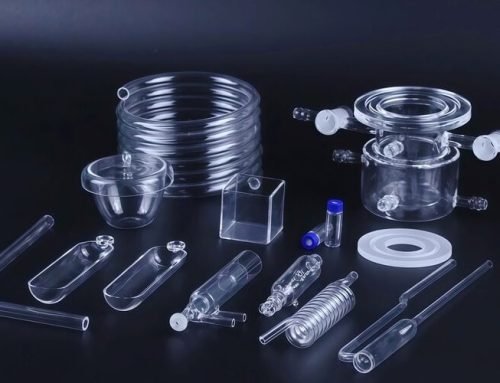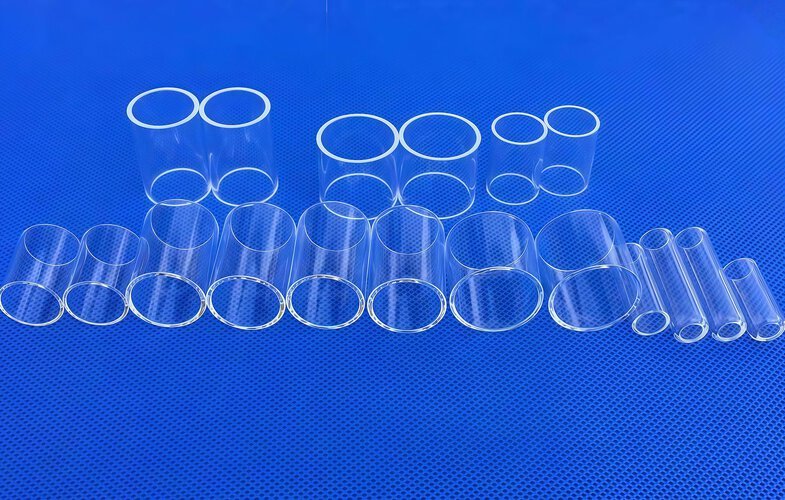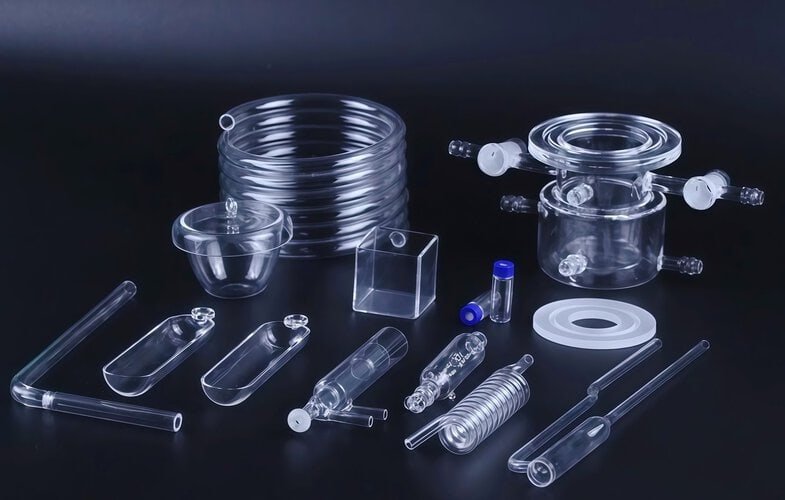

Quartz plates represent a vital component in chemical experimentation due to their unique physical and chemical characteristics. Their utilization ensures the precision of experiments in various domains, including the regulation of reaction environments, stability of experimental conditions, and the reduction of sample loss.
- High purity: the core foundation for eliminating interference from impurities
The primary component of quartz plates is silicon dioxide, with a content of over 99.9%, and they contain minimal impurities such as metal ions and organic substances. Impurities are the hidden causes of experimental deviations, and even trace metal ions may catalyse side reactions. In addition, organic substances may undergo unknown reactions with reactants, altering the reaction rate and the composition of experimental products. For instance, when detecting trace heavy metals, it has been found that lead released by conventional glass can cause inaccurate results. The high purity of the quartz plates is crucial in eliminating interference and ensuring the reliability of the reaction system, thereby providing results that closely resemble true values.
- High-temperature resistance: the stable carrier in extreme reaction conditions
Quartz plates are capable of withstanding temperatures in excess of 1000°C over an extended period, and temperatures in excess of 1200°C for a shorter period. This makes them well suited to applications such as burning and high-temperature synthesis. Ordinary glass softens and deforms at 300°C and is unable to maintain a stable reaction space. In the experiment involving the reduction of metal oxides in a tube furnace using CO, the quartz plate is sealed above 800°C in order to prevent gas leakage or air entry. This ensures a stable reaction metering ratio and accurate determination of product composition.
- Chemical inertness: the anti-corrosion to ensure pure reaction system
Quartz plates are resistant to the corrosion of most acids, alkalis and salts (with the exception of hydrofluoric acid and molten strong alkali). In strong corrosion experiments, ordinary glass is susceptible to corrosion by nitric acid and other substances, releasing silicon ions that can interfere with atomic absorption spectrometry measurements. Quartz plates are capable of withstanding the effects of nitric acid, thereby preventing contamination of the water sample components. In organic synthesis, the use of strong acidic catalysts such as concentrated sulfuric acid ensures that impurities do not dissolve from quartz plates, thereby guaranteeing the accuracy of product purity and yield determination.
- High light transmittance: the support forlight control experiments and real-time monitoring
Quartz plates exhibit high light transmittance in the ultraviolet region (200-400nm), with a rate exceeding 90%. In comparison, standard glass absorbs almost all ultraviolet light. In the experiment of photocatalytic degradation of organic pollutants, ultraviolet light needs to penetrate the container to reach the surface of the catalyst. The ultraviolet transmittance of the quartz plate is guaranteed to ensure that the light is fully exposed, thus guaranteeing that the catalytic efficiency of the different experimental groups is comparable. In addition, the transparency of the quartz plate facilitates real-time observation of reaction phenomena (such as color changes and precipitation formation), enabling timely adjustment of experimental conditions and avoiding result deviations caused by abnormal reactions.
- Low adsorption: reduces trace sample loss
The surfaces of quartz plates are smooth with extremely weak adsorption capacity for molecules and ions. In trace analysis or micro-reaction experiments, the adsorption loss of the sample is an important factor affecting accuracy. When determining trace organic pollutants in water, quartz plates are utilized to prevent adsorption, thereby ensuring reliable extraction and detection results.
In conclusion, the high purity, excellent thermal stability, chemical inertness, low coefficient of thermal expansion, high optical transmittance, and minimal adsorption properties of quartz plates collectively ensure the accuracy and reliability of chemical experiments by maintaining a controlled reaction environment, precise experimental conditions, and effective sample protection. As such, quartz plates are indispensable in advanced chemical research.