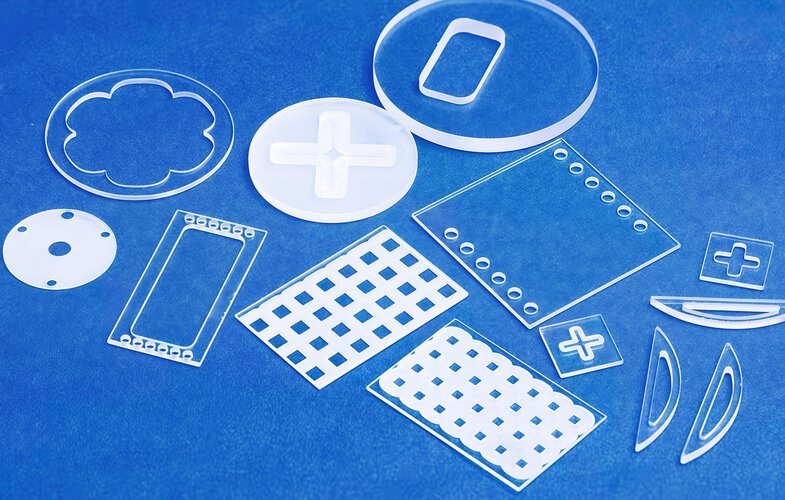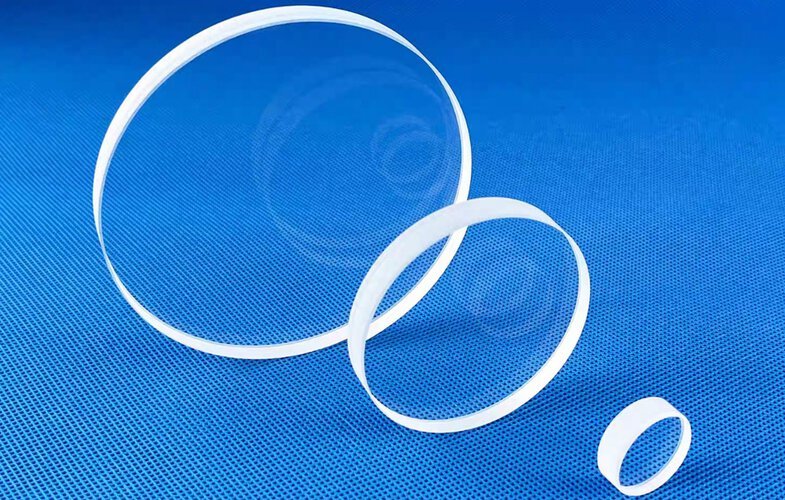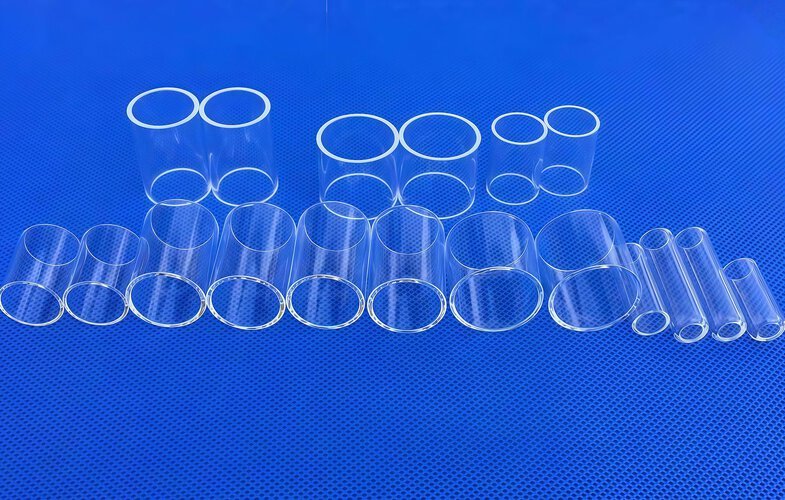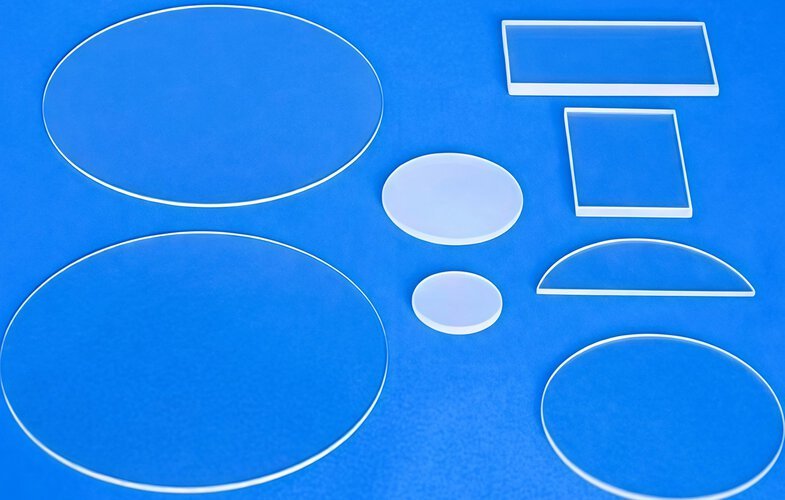
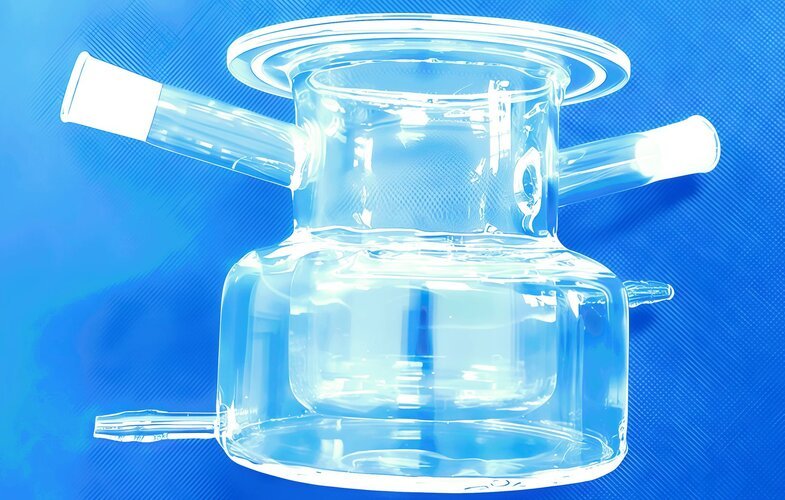
Quartz materials, owing to their distinctive physical and chemical properties, have become essential components in biotechnology research and applications. From fundamental scientific investigations to industrial processes, quartz instruments are widely used in sample preparation, analytical detection, reaction monitoring, and process control. This article provides a systematic overview of the significance of quartz instruments by examining the intrinsic characteristics of quartz materials and their specific applications in the field of biotechnology.
- The core characteristics of quartz materials
- Chemical inertness
Quartz exhibits extremely high resistance to most acids, alkalis and organic solvents (except hydrofluoric acid), which can prevent contamination caused by material corrosion during experiments. For instance, in DNA sequencing or protein purification, quartz reactors can ensure the purity of the samples.
- Heat stability
Quartz glass has a melting point of over 1700°C and an extremely low coefficient of thermal expansion, making it suitable for high-temperature sterilization (such as the window of an autoclave) or experimental environments with significant temperature differences.
- Optical transparency
The high transmittance of quartz glass in the ultraviolet-visible light range (particularly within ultraviolet wavelengths) makes it an ideal choice for spectral analysis, such as in UV spectrophotometer cuvettes.
- Mechanical strength and wear resistance
The high hardness of quartz allows for precise processing, including the creation of devices such as microfluidic chips, and it is resistant to deformation, even after extended use.
- The key applications of quartz instruments in biotechnology
- Cell culture and microscopic observation
-Petri dishes and observation windows
The ultraviolet transmittance of quartz cuvettes supports real-time observation of fluorescently labeled cells, while ordinary glass absorbs ultraviolet light.
-Confocal microscope stage
High-transparency quartz plates reduce light scattering and enhance the clarity of three-dimensional imaging.
- Biosensors and diagnostic equipment
-Surface plasmon resonance (SPR) chip
Gold film sensors on quartz substrates are used for real-time monitoring of molecular interactions.
-Raman spectroscopy enhanced substrate
Quartz nanostructures can enhance the Raman signals of biomolecules and improve the sensitivity of trace detection.
- Fermentation and bioreactors
-pH and dissolved oxygen sensor probe
Quartz encapsulation material protects the sensitive electrode, and is resistant to the complex chemical environment in the fermentation broth.
-Bioreactor observation window
The quartz window resistant to high pressure is convenient for online monitoring of the growth status of microorganisms.
- Drug development and quality control
-High-performance liquid chromatography (HPLC) column
Quartz chromatographic columns are resistant to high pressure and corrosion, making them suitable for the separation and purification of proteins or small molecule drugs.
- Conclusion
Quartz instruments, leveraging their distinctive physical and chemical properties, have become a critical enabler in biotechnology, supporting advancements from laboratory research to industrial applications. Whether in the precise monitoring of cell cultures or in large-scale biopharmaceutical production, quartz devices play a pivotal role in ensuring data accuracy and enhancing process efficiency. As materials science and bioengineering continue to converge, quartz instruments are poised to further expand the frontiers of biotechnology, delivering robust technological support to fields such as human health and environmental management.